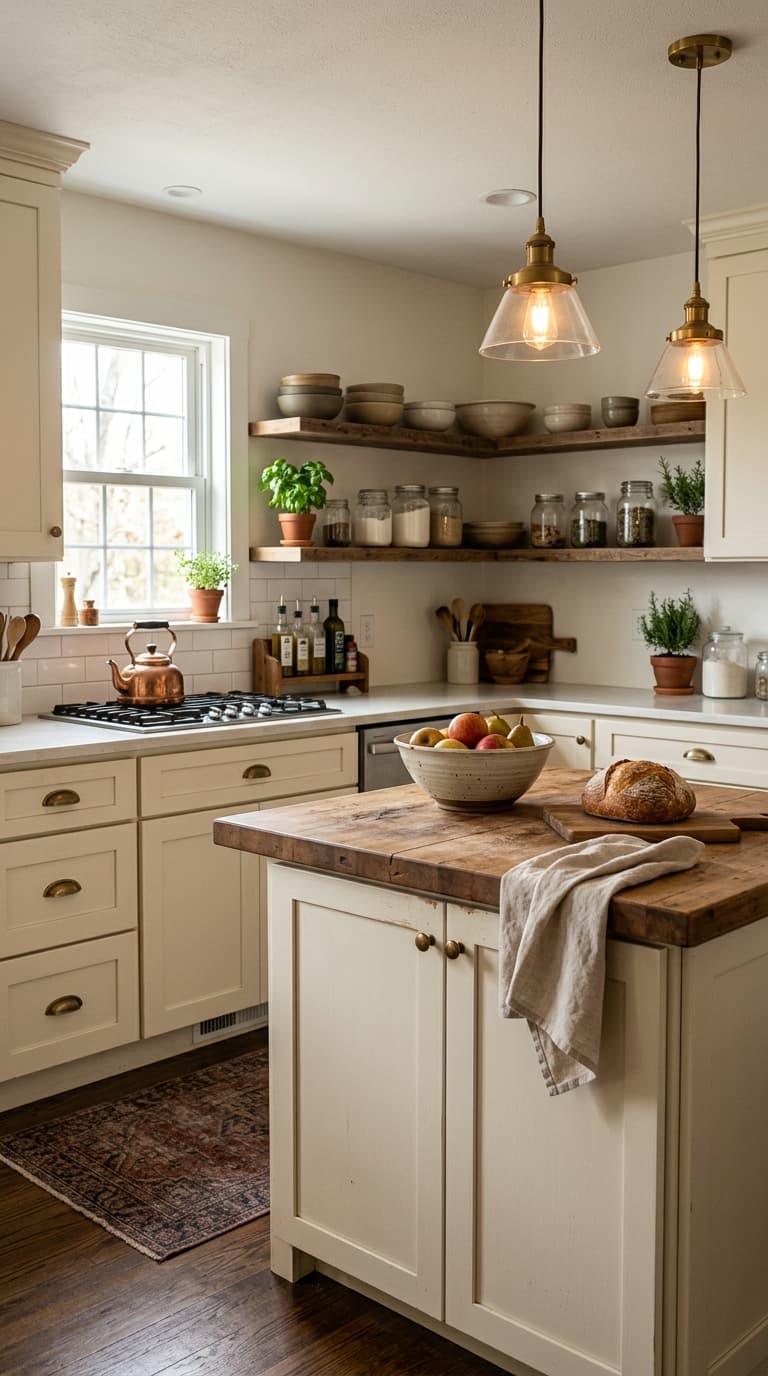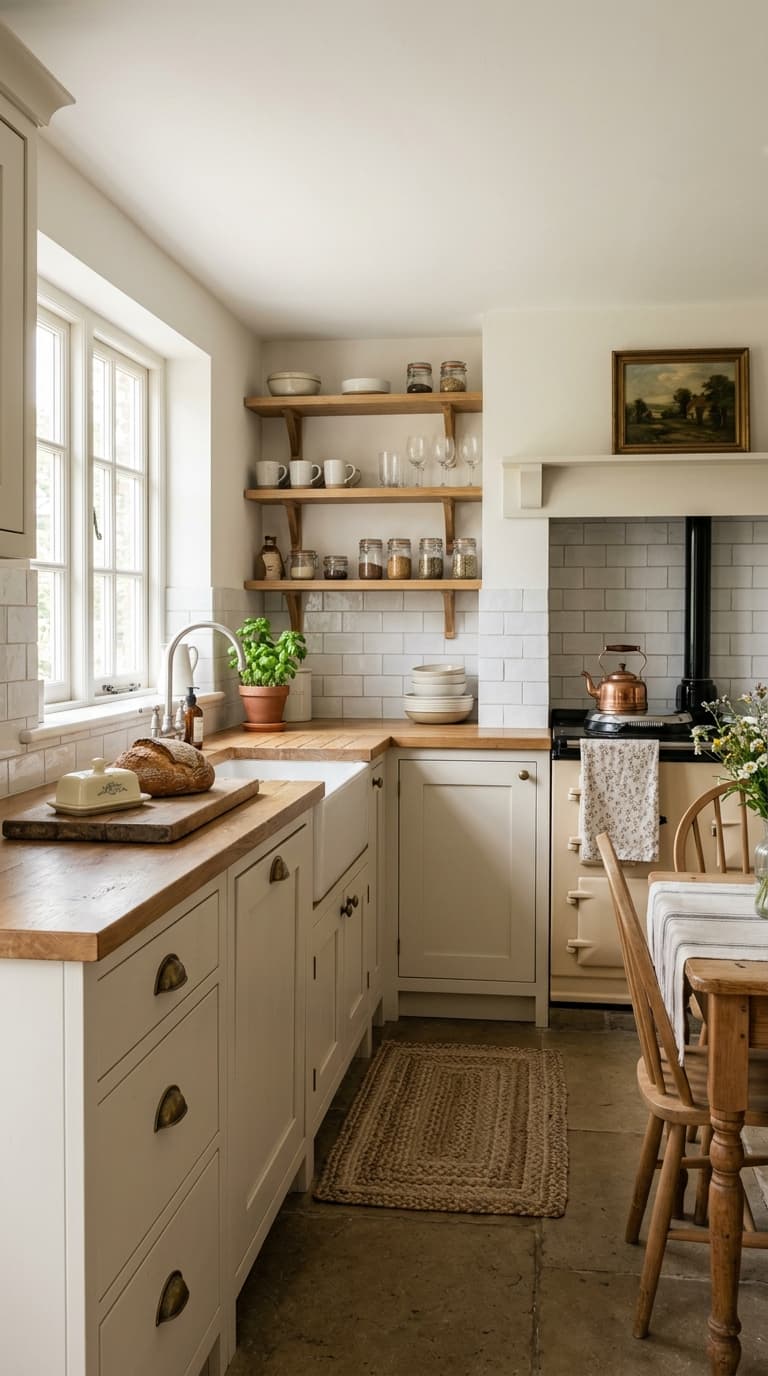
12 Cottage Kitchen Ideas for a Charming Cosy Cooking Space
Embrace Open Shelving Instead of Upper Cabinets
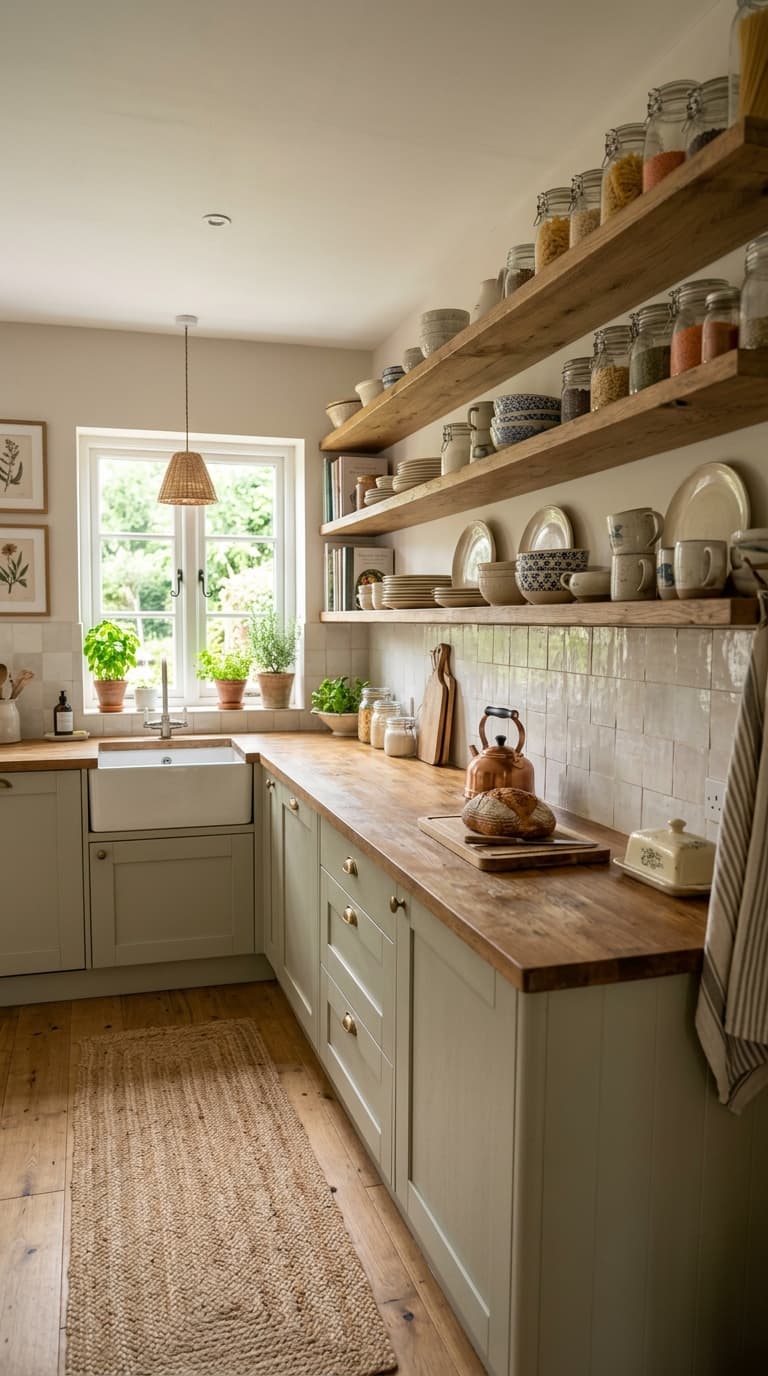
One of the easiest ways to give your kitchen that open, airy cottage feel is to ditch some of those upper cabinets and swap them for open shelves. Yes, things get dusty. Yes, you have to actually keep them tidy. But honestly? The trade-off is worth it.
Stack mismatched vintage plates, line up your favourite mugs, and let your everyday items become the decoration. It sounds counterintuitive, but showing off your “stuff” is exactly what makes a cottage kitchen feel lived-in and real rather than staged and sterile.
Use reclaimed wood for the shelves if you can — even a lightly sanded pallet plank stained in a warm walnut tone does the job beautifully.
Install a Belfast or Butler Sink
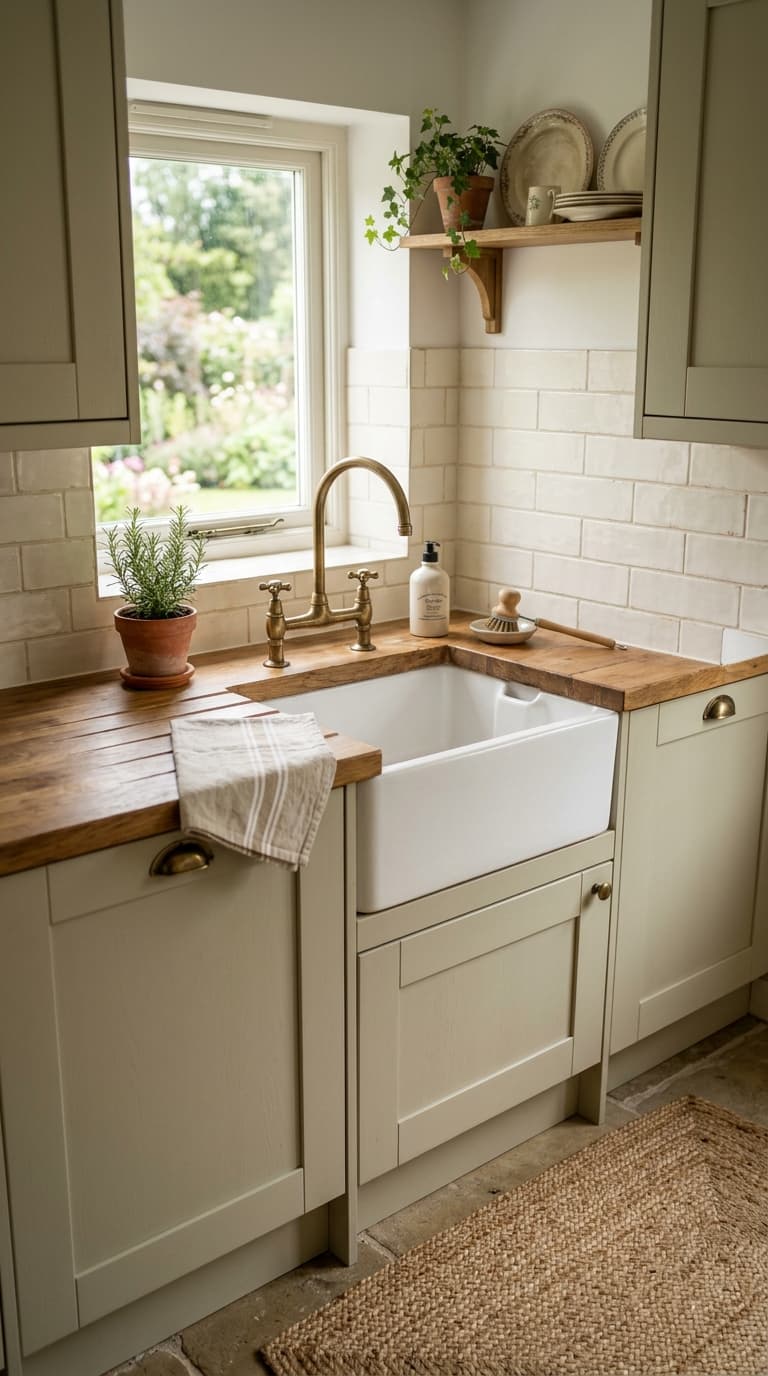
If there’s one single upgrade that screams cottage kitchen, it’s a deep ceramic Belfast sink. Nothing else comes close. The chunky white basin, the exposed plumbing, the sheer practicality of it — it just works.
They’re brilliant for washing large pots and they look gorgeous paired with brass or brushed copper taps. IMO, it’s one of those purchases you’ll never regret. You can find decent options on Victorian Plumbing if you’re in the UK and want a wide range without the showroom markup.
Pair it with a wooden draining board for extra cottage points.
Use Shaker-Style Cabinets in Muted Tones
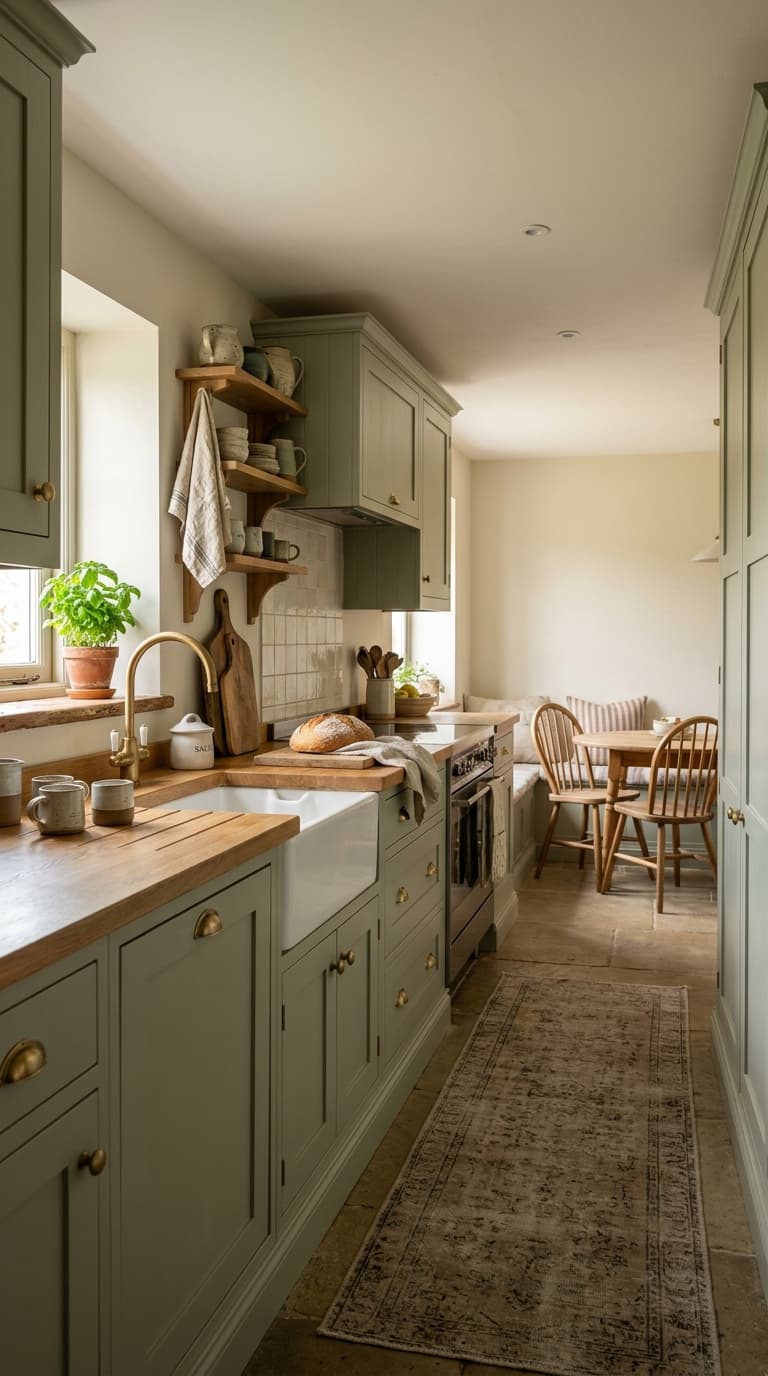
Shaker cabinets are the bread and butter of cottage kitchen design, and for good reason — they’re simple, timeless, and they go with absolutely everything. The flat recessed panels give just enough detail without trying too hard.
Go for muted, earthy tones rather than stark white. Think sage green, dusty blue, warm cream, or even a soft terracotta. These colours feel grounded and cosy rather than clinical. A shade like Farrow & Ball’s “Mizzle” or “Vert de Terre” is perfect if you want something with a bit of personality.
Don’t stress about matching every cabinet exactly either. A two-tone look — darker lowers, lighter uppers — actually adds a lot of charm.
Add Wooden Worktops for Warmth
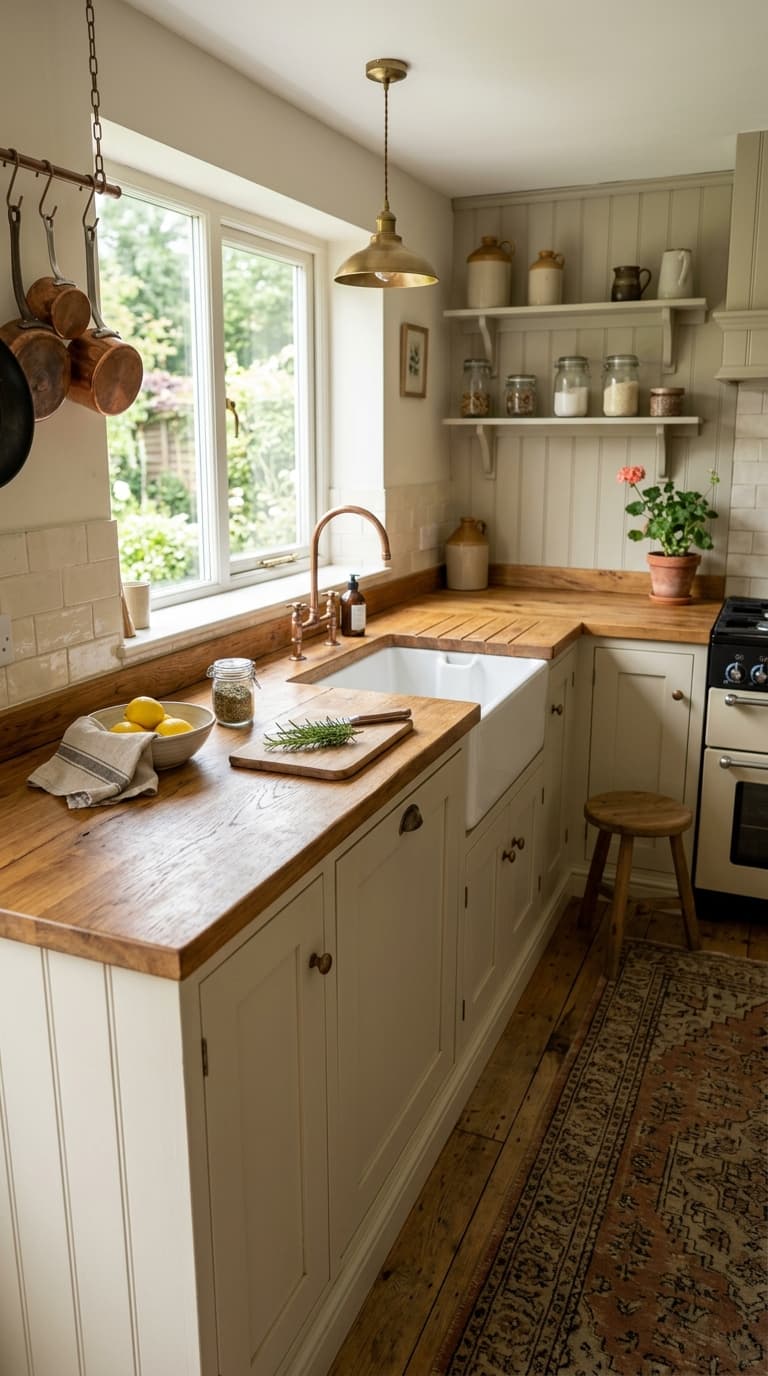
Marble gets all the attention, but in a cottage kitchen, wooden worktops are where it’s at. They’re warm underfoot, they age beautifully, and they develop a character over time that no engineered surface can replicate.
Solid oak and walnut are popular choices, and they’re surprisingly hardwearing if you oil them properly every few months. Worktop Express is a solid place to browse if you want real wood options at reasonable prices.
Yes, you’ll get the odd knife mark or water ring. But honestly, those little imperfections are the point.
Hang Copper or Cast Iron Pots from a Ceiling Rack
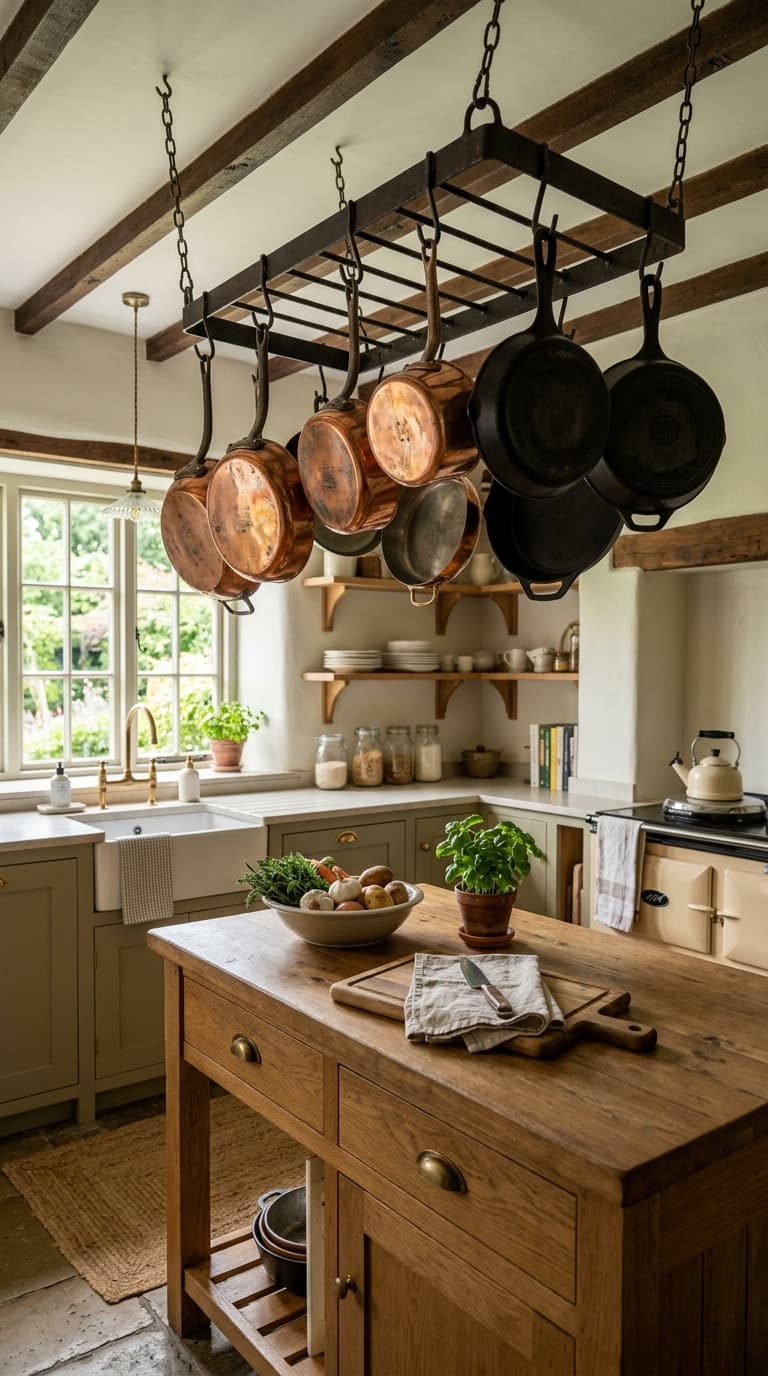
Storage in a cottage kitchen doesn’t have to mean more cupboards. A ceiling-mounted pot rack does double duty — it frees up cabinet space and looks absolutely stunning when you’ve got copper pans or cast iron skillets hanging from it.
A simple black iron rack or a wooden dowel hung with S-hooks works just as well as anything fancy. The key is making it look intentional, not like you ran out of drawer space (even if you did).
This also nudges you to actually use your nicer cookware instead of hoarding it at the back of a cabinet where it sees daylight twice a year.
Bring in a Freestanding Kitchen Island
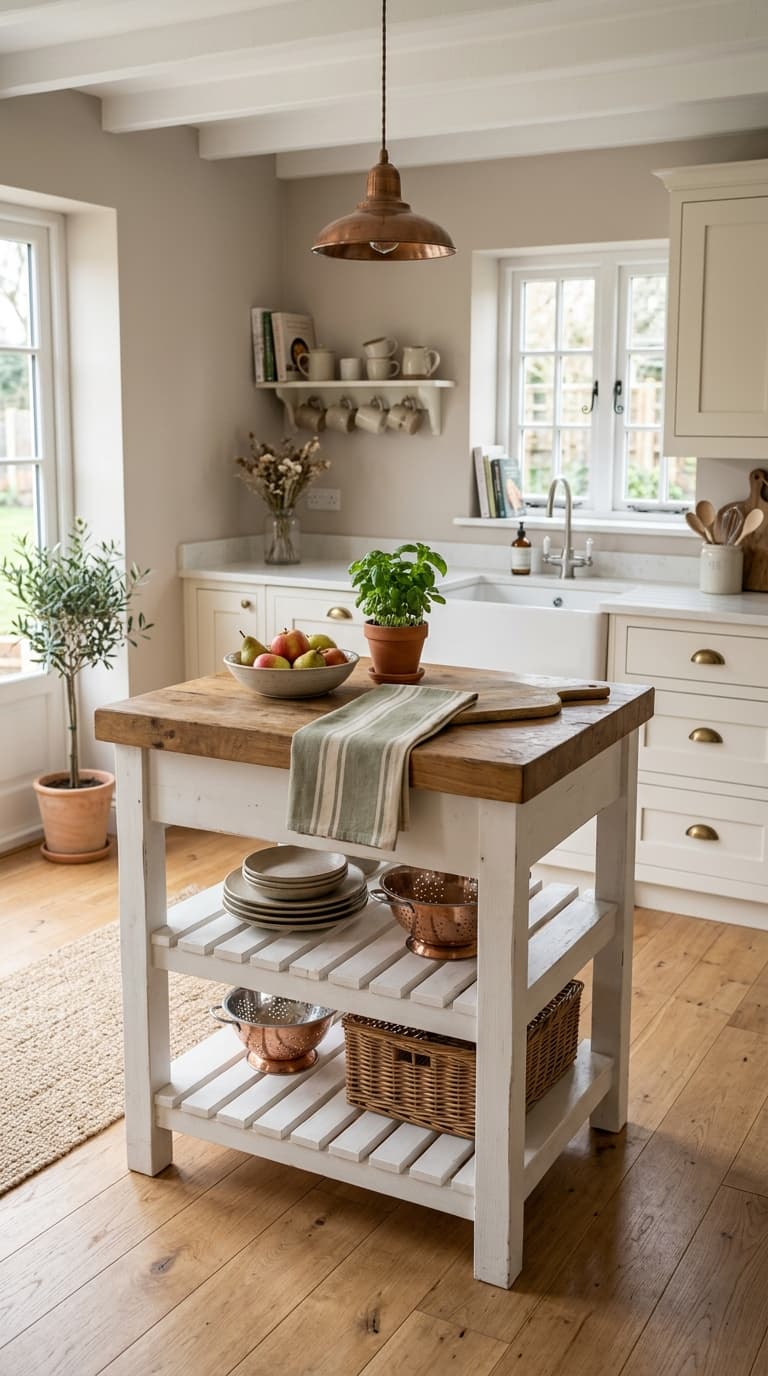
Fitted kitchens are great, but a freestanding island adds that relaxed, collected-over-time feel that cottage interiors are known for. It looks like it’s been there forever, even if you ordered it last Tuesday.
An old farmhouse table, a repurposed butcher block, or even a painted dresser base with a wooden top all work brilliantly. Add a couple of bar stools on one side and it becomes the unofficial social hub of the whole house.
It also means you’re not completely locked into one layout forever, which is a quiet little win for anyone who rearranges rooms for fun.
Use Tongue-and-Groove Panelling on the Walls
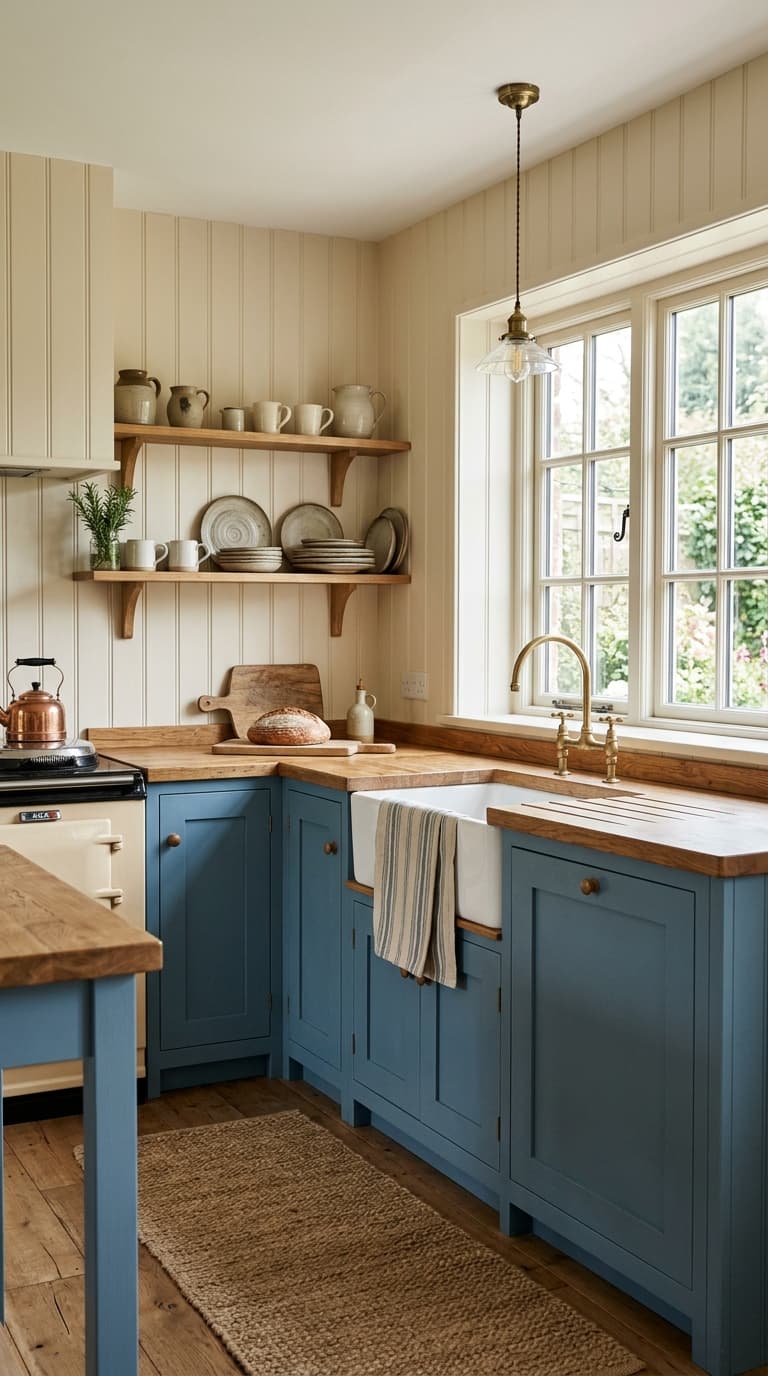
Tongue-and-groove panelling — also called shiplap or wainscoting depending on how it’s applied — is one of those finishing touches that makes a kitchen feel properly designed rather than just decorated.
Run it halfway up the wall and paint it in a colour that ties in with your cabinets. It adds texture, it hides a multitude of sins on older walls, and it’s surprisingly easy to DIY if you’re handy with a nail gun and a Saturday afternoon.
Keep the upper walls plain and light to avoid it feeling too heavy or cave-like.
Layer in Vintage and Antique Finds
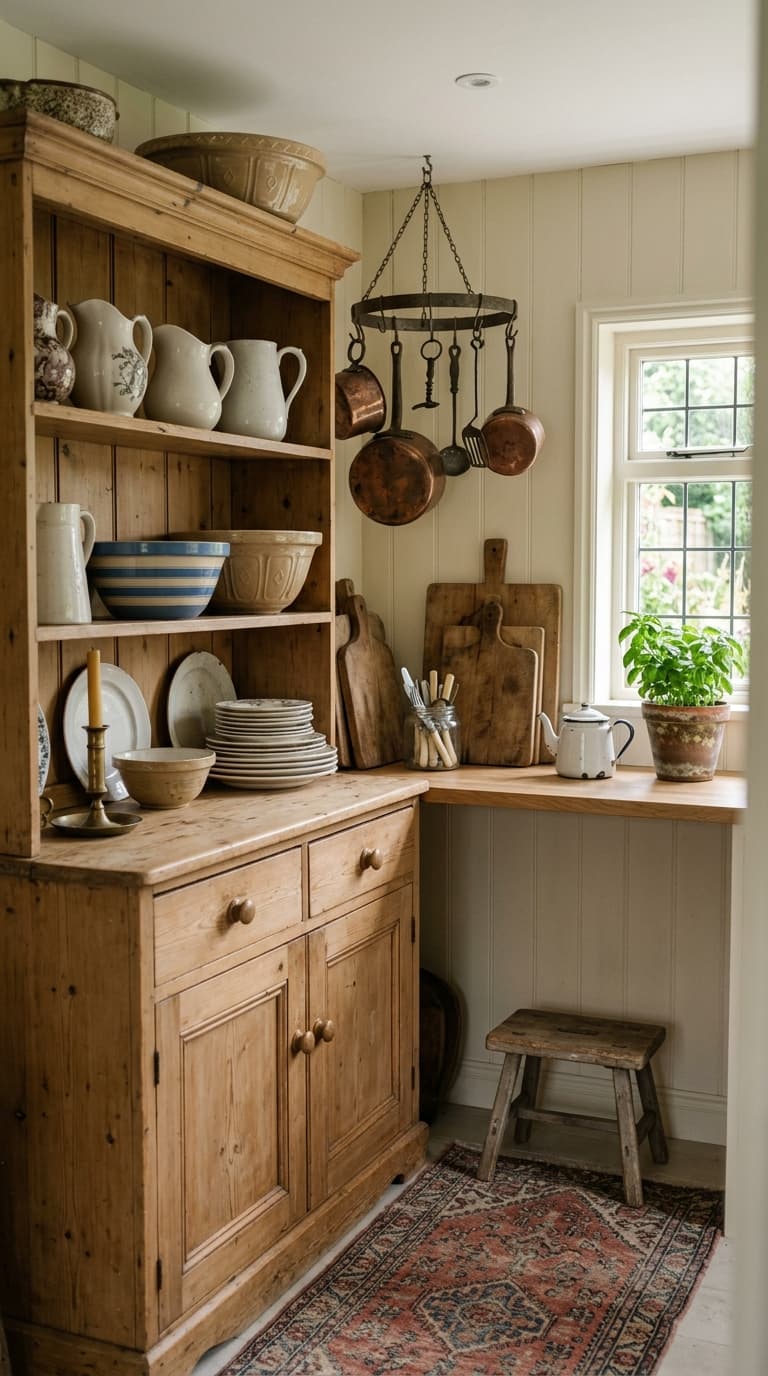
A cottage kitchen isn’t the place for everything matching and coordinated. The whole point is that it looks like it’s evolved over time — because ideally, it has.
Hunt around charity shops, car boot sales, and antique markets for things like old ceramic canisters, enamelware, vintage scales, or a battered wooden bread bin. These pieces add soul in a way that no brand-new accessory ever quite manages.
Even small things help — a jug of wooden spoons, an old butter dish, a stack of slightly mismatched mugs. It’s the accumulation of small, personal things that makes a kitchen feel genuinely cosy rather than Pinterest-perfect.
Choose Stone, Slate, or Flagstone Flooring
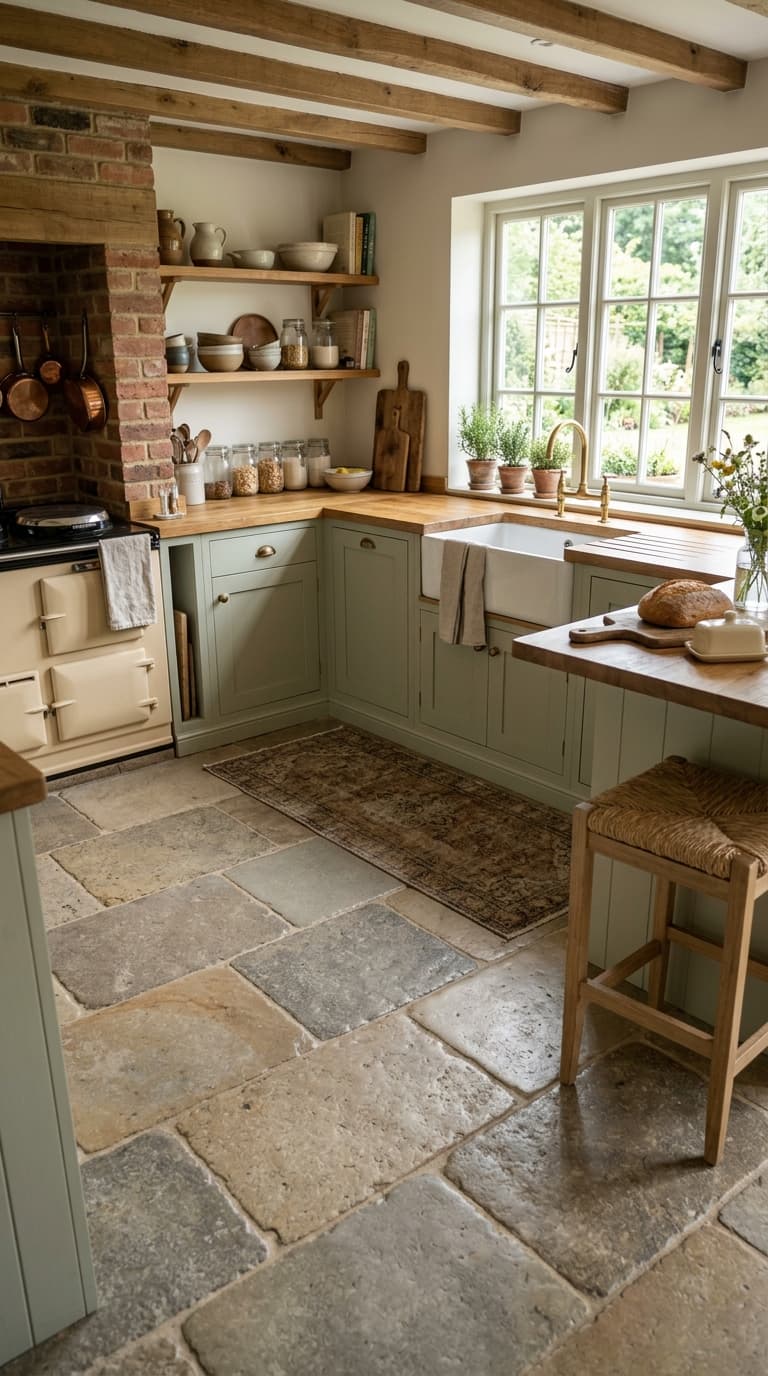
Underfoot matters more than people realise. A cold, hard tile can make a kitchen feel utilitarian, but the right stone floor anchors the whole cosy cottage look instantly.
Natural flagstone, reclaimed slate, or terracotta tiles all work beautifully. They’re durable, they age well, and they look even better after a few years of foot traffic have softened them up a bit. Layer in a worn, washable runner rug in front of the sink or along an island for warmth and a little colour.
FYI — underfloor heating under stone is an absolute luxury worth considering if you’re doing a bigger renovation. Your morning coffee routine will never be the same.
Install Leaded or Multi-Pane Cabinet Glass
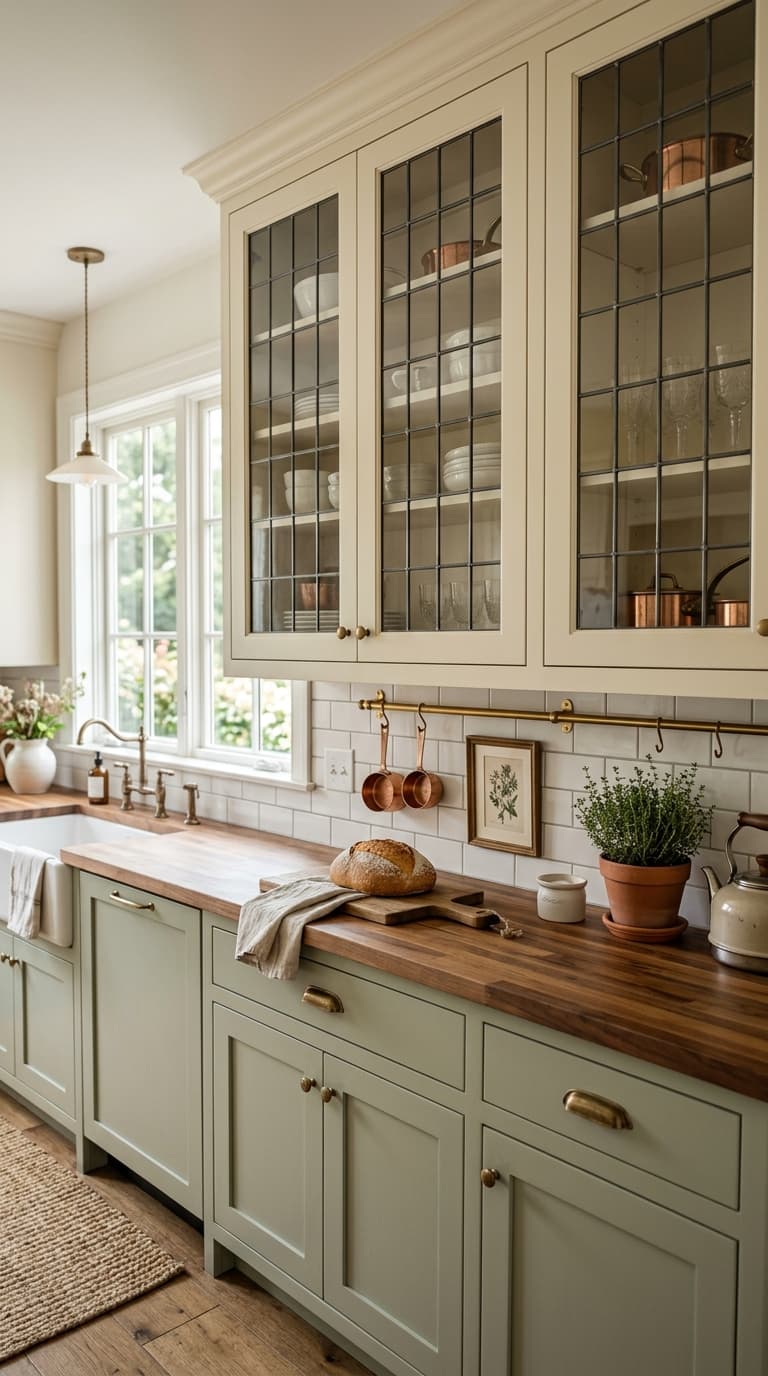
If you’re keeping upper cabinets, swapping out flat glass panels for leaded or multi-pane glass is a low-cost way to add a huge amount of character. It softens the cabinet fronts and gives that old-world, hand-crafted feel that you just can’t fake with flat surfaces.
The slight visual distortion of old-style glass also means your shelves don’t have to be perfectly curated — a nice bonus if you’re not naturally a “neat shelf” person (no judgement, same).
Pair with simple cup handles in brass or wrought iron to keep the look cohesive.
Add a Range Cooker as the Kitchen’s Centrepiece
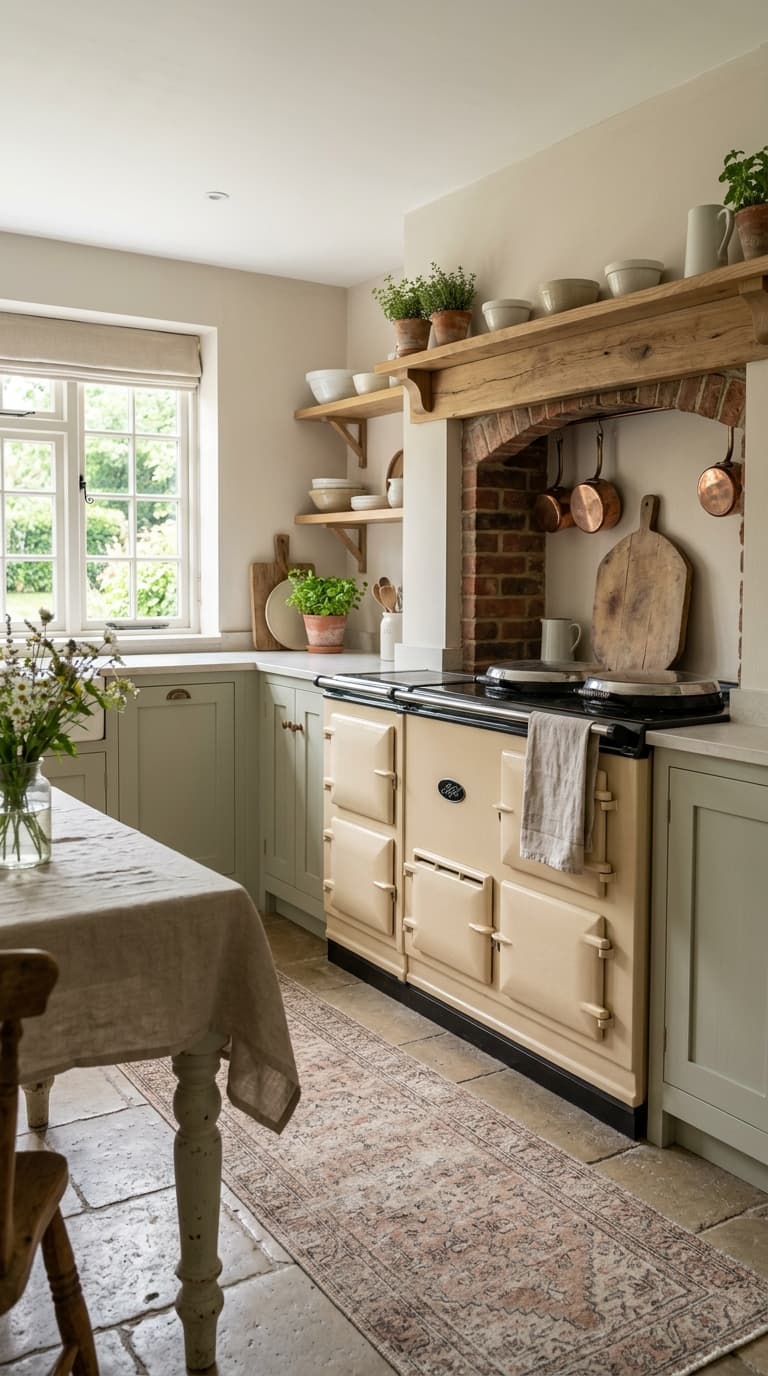
In a cottage kitchen, the range cooker isn’t just an appliance — it’s the focal point. Everything else kind of builds around it. A wide, colourful range cooker in cream, duck egg blue, or forest green becomes the heart of the room in the best possible way.
Brands like Rangemaster or AGA are the dream, but there are more affordable options that deliver the same visual impact without the eye-watering price tag. Surround it with a simple painted wooden mantel or a tiled splashback in a traditional pattern and the whole thing comes together instantly.
There’s also something deeply satisfying about cooking on a range — it just feels more intentional, somehow.
Use Soft, Warm Lighting Throughout
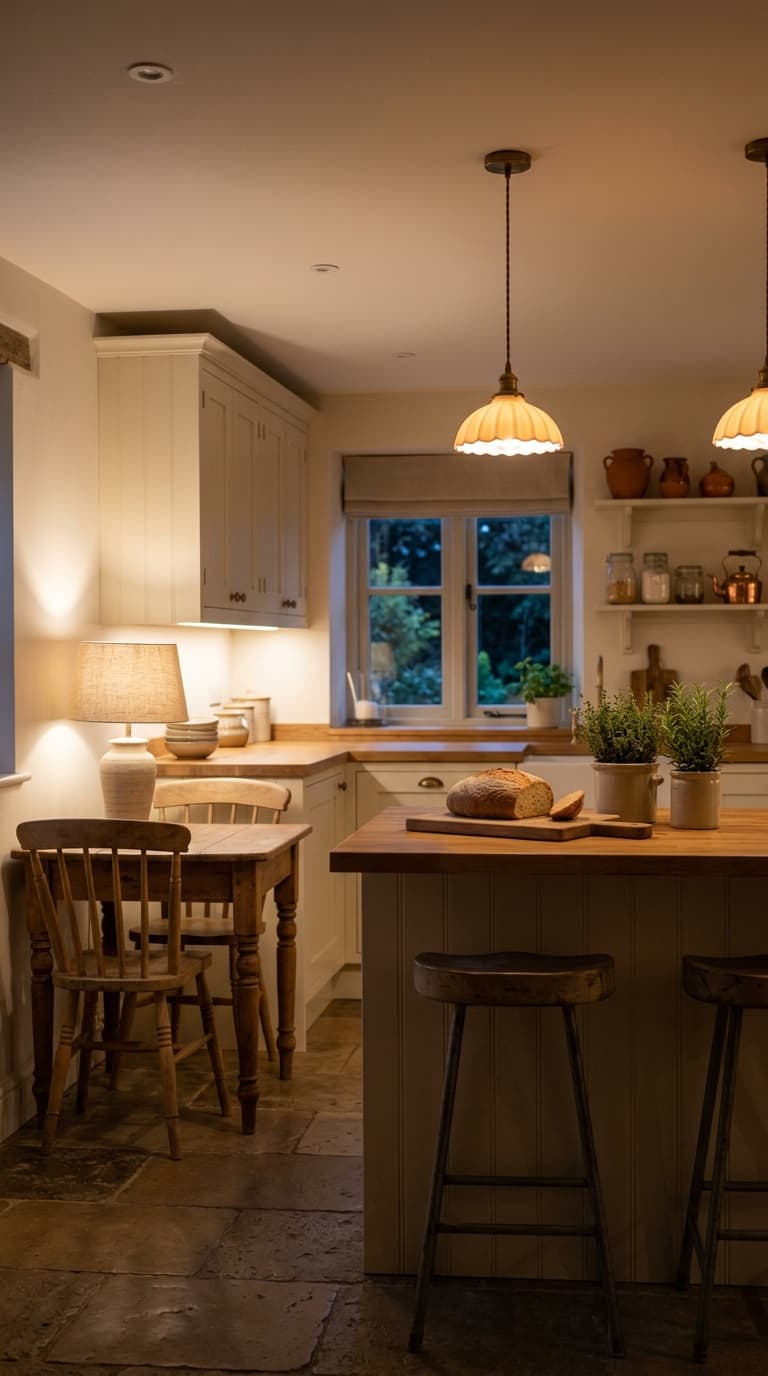
Lighting is the thing most people leave until last and then wonder why their kitchen still doesn’t feel quite right. In a cottage kitchen, you want layers of warm, soft light — not one harsh overhead fitting doing all the work.
Think pendant lights over the island, under-cabinet lighting along the worktops, and maybe a wall sconce or two for atmosphere. Warm white bulbs (around 2700K) are the ones to go for — they make everything glow rather than glare.
An old lantern-style pendant, a cluster of filament bulbs, or even a small chandelier above a kitchen table can completely change the mood of the room. It’s one of the most cost-effective changes you can make to shift a space from functional to genuinely lovely.
Creating a cosy cottage kitchen isn’t about following a strict formula — it’s about layering texture, warmth, and personality until the room feels like yours. Whether you overhaul the whole thing or just swap out a few accessories, every little change moves you closer to that warm, welcoming space you’re after. Start small, trust your instincts, and don’t be afraid to let a bit of imperfection in. That’s where the charm actually lives.