13 Mid Century Modern Kitchen Ideas for a Retro Functional Space
13 Mid Century Modern Kitchen Ideas for a Retro Functional Space
There’s something about mid century modern design that just hits different. It’s the kind of style that feels simultaneously old-school and ahead of its time — like your kitchen could belong to a 1960s architect but still look completely intentional today. If you’ve been eyeing those clean lines, warm wood tones, and retro color palettes all over Pinterest, you’re not alone. The good news is you don’t need to gut your entire kitchen to get the look. You just need the right ideas and a clear direction.
Here are 13 mid century modern kitchen ideas that actually work in real life — not just in staged photoshoots.
Flat-Front Cabinetry With Simple Hardware
Nothing says mid century modern quite like flat-front cabinet doors. Skip the ornate raised panels — those belong in a different decade. Go for clean, slab-style cabinet fronts in walnut, teak, or a painted matte finish. Then keep the hardware minimal: think thin brass pulls or even recessed finger pulls for a super sleek look.
The hardware detail here matters more than people realize. Brass and matte black are the two safest bets for that authentic retro-functional feel. Avoid chrome if you can — it leans more contemporary than mid century.
Warm Wood Tones on Lower Cabinets
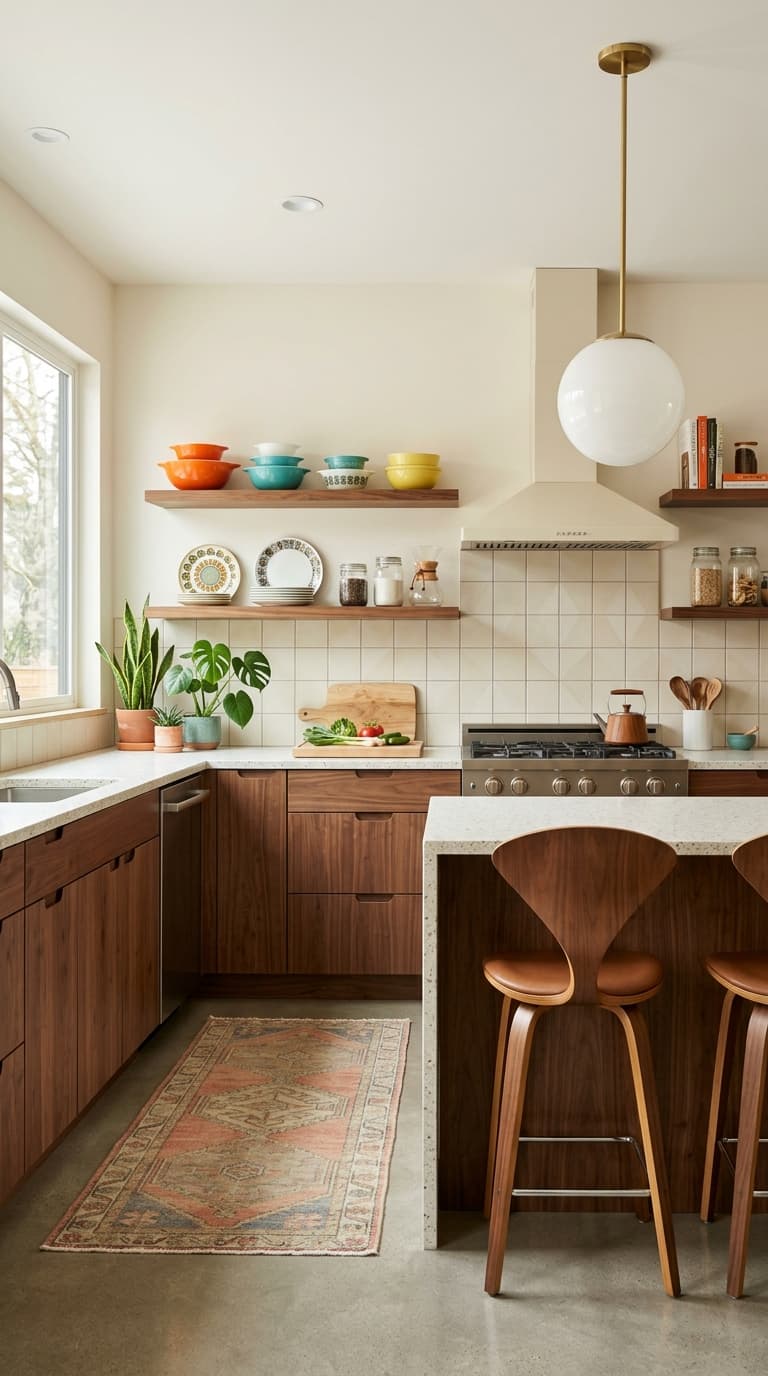
One of the most iconic mid century modern kitchen moves is pairing warm wood lower cabinets with painted uppers. Walnut is the classic choice, but teak-look veneers or even stained oak work beautifully too. The wood grounds the whole space and keeps it from feeling too sterile.
If you’re going this route, keep the wood tone consistent. Mixing too many wood species gets chaotic fast. Pick one and stick with it throughout the kitchen and into adjacent spaces if possible.
Terrazzo Flooring or Countertops
Terrazzo is having a serious comeback, and honestly, it never should have left. This speckled composite material — a mix of marble chips, glass, or quartz set in a binding material — is about as mid century modern as you can get. You’ll find it on floors, countertops, and even backsplashes.
The beauty of terrazzo is that it adds visual interest without competing with the rest of your design. A warm-toned terrazzo with amber or rust flecks pairs especially well with wood cabinetry and muted wall colors. FYI, terrazzo countertops are surprisingly durable once sealed properly.
A Statement Retro Color Palette
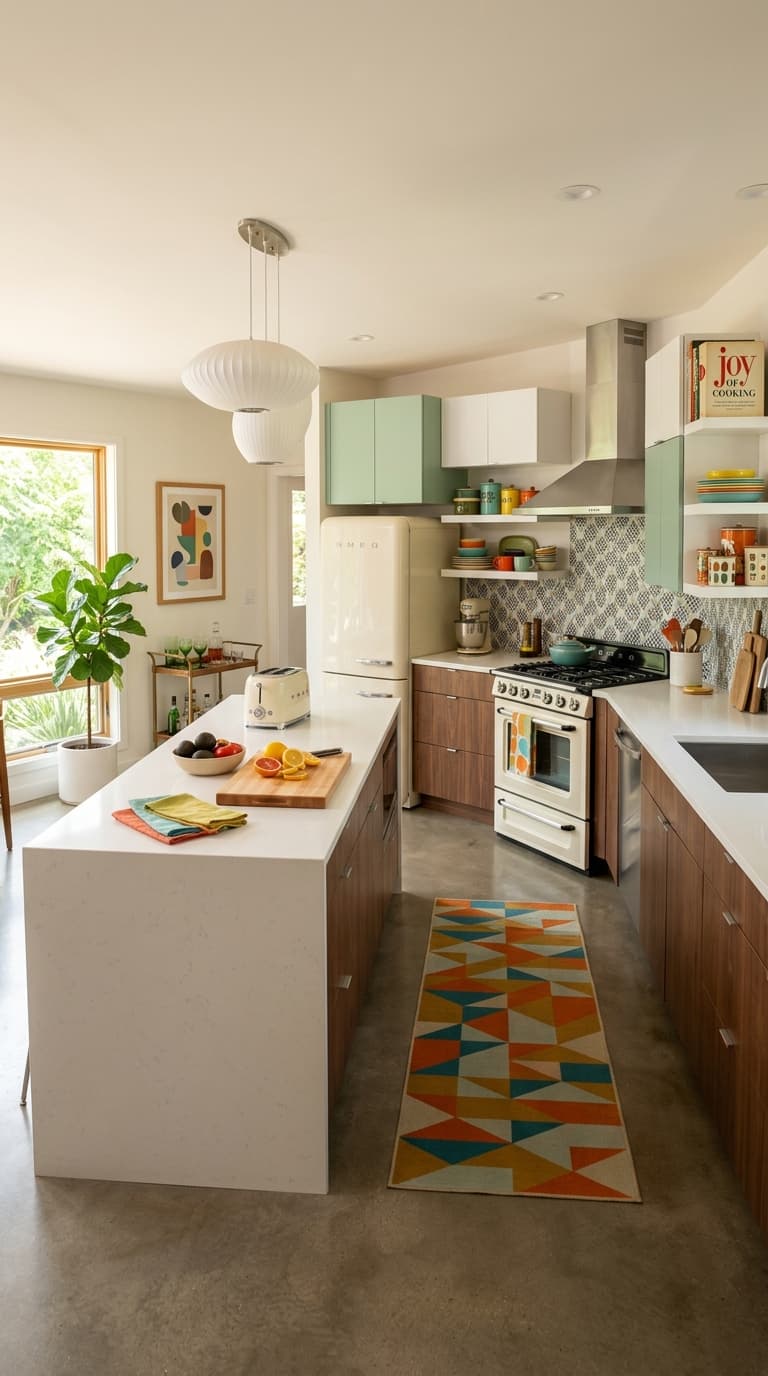
Mid century modern kitchens weren’t afraid of color — and you shouldn’t be either. Think avocado green, harvest gold, burnt orange, warm teal, or even a dusty rose. These aren’t the colors of today’s farmhouse kitchens, and that’s exactly the point.
You don’t have to paint every wall in a bold shade. One statement color on the lower cabinets or an island goes a long way. Pair it with warm neutrals like cream, tan, or off-white to balance things out. A pop of harvest gold in a kitchen with natural wood and terrazzo flooring? Honestly stunning.
Open Wooden Shelving Instead of Upper Cabinets
Upper cabinets can feel heavy and closed-off — and in a mid century modern kitchen, open wooden shelving just makes more sense visually. It keeps the walls light and airy while giving you a chance to display ceramics, glassware, and plants that add personality.
The trick is not overloading the shelves. Style them intentionally — a few nice bowls, some cookbooks, a trailing pothos, and your everyday glasses. Treat it like a mini display rather than a storage dump. Floating walnut shelves with thin metal brackets hit the aesthetic perfectly.
Integrated Appliances for a Clean Look
Mid century modern kitchens are all about clean, uninterrupted lines. If you’ve got a dishwasher door sticking out with a big stainless steel panel, it’s going to fight the whole vibe. Panel-ready or integrated appliances — where the appliance front matches the cabinetry — are worth considering if you’re doing a full renovation.
Even without going fully integrated, choosing appliances in matte black or retro-style finishes makes a huge difference. Brands like SMEG make refrigerators that look like they belong in a 1950s Italian kitchen, and they’re incredibly popular for good reason.
A Functional Island With Seating
An island isn’t just practical — it’s a social hub, and mid century modern design absolutely supports that. Go for an island with a simple waterfall edge in a contrasting material, like a butcher block top on a painted base, or a stone slab with wood legs.
Bar stool selection matters a lot here. Look for stools with thin tapered legs in wood or metal — the kind that look like they belong in a Scandinavian design catalog from 1962. Avoid bulky upholstered bar stools that add visual weight. Keep it sleek and low-profile.
Penny Tile or Geometric Backsplash
The backsplash is one area where you can have a little fun without committing to anything too drastic. Penny tile in warm white, cream, or even a soft sage is a go-to mid century move. So are geometric or hexagon tiles in muted tones.
Avoid busy patterns — mid century modern is about deliberate, structured repetition, not chaos. A simple penny tile in an offset layout with a warm grout color reads as intentional and timeless rather than trendy. It’s an easy upgrade that makes a big visual impact.
Layered Lighting With Globe Pendants
Lighting in a mid century modern kitchen deserves real attention. The goal is layered: overhead ambient light, task lighting under cabinets, and a statement pendant or two over the island or dining area.
Globe pendants — especially in smoked glass, amber, or brushed brass — are iconic to this style. One oversized globe pendant or two smaller ones spaced evenly over an island creates that perfect retro-functional look without being too fussy. Skip recessed-only lighting; it’s too sterile for this aesthetic.
Sputnik-Style or Arched Floor Lamp in the Eat-In Area
If you have an eat-in kitchen or a little breakfast nook, a statement lamp changes the whole atmosphere. A Sputnik-style ceiling fixture or a curved arched floor lamp with a brass finish brings in that unmistakable mid century energy.
This is also a relatively low-cost way to introduce the aesthetic without renovating anything. Swap out an outdated light fixture and suddenly your kitchen feels 30 years more interesting. The Sputnik chandelier has become a bit of a cliché at this point, sure — but there’s a reason it keeps showing up. It works.
Eames-Style Chairs in the Breakfast Nook
Speaking of breakfast nooks — if you’ve got the space for a small table and chairs, this is your moment. Eames-style molded plastic or fiberglass shell chairs in warm colors (mustard, orange, nude, or olive green) are practically synonymous with mid century modern design.
You don’t need to buy original Herman Miller pieces (though if you can, respect). There are plenty of well-made replicas available that look fantastic. Mix seat colors on matching chair bases for a playful but cohesive look — it’s a classic styling trick that feels curated rather than chaotic.
Muted Earth Tones on the Walls
Wall color sets the entire mood of a mid century modern kitchen, and the right choice can tie together all your design decisions effortlessly. Go for muted, warm earth tones: terracotta, warm greige, dusty olive, soft clay, or warm white. These shades complement wood tones and feel naturally cozy without overwhelming the space.
Avoid cool grays and stark whites — they push the kitchen toward contemporary minimalism rather than mid century warmth. The goal is a space that feels lived-in and intentional, not like a magazine showroom. Think warm, think grounded.
Vintage-Inspired Accessories and Ceramics
The final layer — and honestly one of the most fun parts — is the accessories. Mid century modern kitchens looked the way they did not just because of the furniture and finishes, but because of the objects people kept around: ceramic canisters, wooden fruit bowls, sculptural vases, and enameled cookware in bold colors.
Le Creuset in a retro color, a stoneware crock for utensils, a wooden salad bowl — these details make the whole space feel authentic. Thrift stores and vintage markets are gold mines for this kind of stuff. IMO, a $12 vintage ceramic canister from a secondhand shop does more for a mid century kitchen than a $200 generic decor piece from a big box store ever could.
Wrapping It Up
Mid century modern kitchens are really about balance — clean structure meets warmth, function meets personality, retro meets practical. You don’t need a massive renovation budget or a designer on speed dial to pull it off. Start with one or two ideas that feel manageable (flat-front cabinets or open shelving are great starting points), and build from there.
The best part about this style? It’s genuinely timeless. People were obsessed with mid century modern design in the 1960s, rediscovered it in the 1990s, and it’s still going strong today. There’s a reason for that. It just works — and it’ll keep working long after the next trend cycle burns through and fades out.