25 Easy Heart-Healthy Meals for Beginners
25 Easy Heart-Healthy Meals for Beginners
Heart-healthy cooking sounds intimidating when you’re just starting out. You see recipes with 47 ingredients, complicated techniques, and instructions that assume you know what “deglaze the pan” means. Meanwhile, you’re just trying to make dinner without setting off the smoke alarm.
I’ve been there. When my doctor told me to start eating better for my heart, I could barely boil pasta without screwing it up. The idea of cooking “healthy” meals felt impossible when I was still figuring out basic cooking.
These 25 meals changed everything. They’re actually designed for beginners—minimal ingredients, simple techniques, hard to mess up. And they’re genuinely good for your cardiovascular health, not just “less bad than takeout.”
What “Beginner-Friendly” Actually Means
Before we jump in, let’s define what makes these meals actually doable when you’re just learning to cook. They all share these features:
Five ingredients or fewer (not counting basics): Basics meaning salt, pepper, olive oil—stuff you should always have around. The actual meal-specific ingredients are minimal.
One or two cooking methods max: Roasting, sautéing, or baking. Not all three in one recipe with precise timing requirements.
Minimal prep work: If a recipe requires julienning vegetables or other knife skills you don’t have yet, it’s not on this list.
Hard to overcook or undercook: Forgiving foods that still taste good even if you’re not precise with timing.
Readily available ingredients: Everything on this list you can find at any regular grocery store. No specialty items, no hunting through three stores.
According to the American Heart Association’s cooking recommendations, cooking at home is one of the single most effective ways to improve heart health—even if you’re not a great cook yet.
Essential Tools You Actually Need
You don’t need a fully stocked kitchen to make these meals. Here’s what you genuinely need:
- [One good chef’s knife] (doesn’t have to be expensive, just sharp)
- [A large nonstick skillet] (makes everything easier)
- [A rimmed baking sheet] (for roasting)
- [A medium pot with lid] (for grains, pasta, soup)
- Cutting board, measuring cups, mixing bowls
That’s it. You can make every single meal on this list with those five things. Everything else is nice to have but not essential.
Simple Chicken Dinners
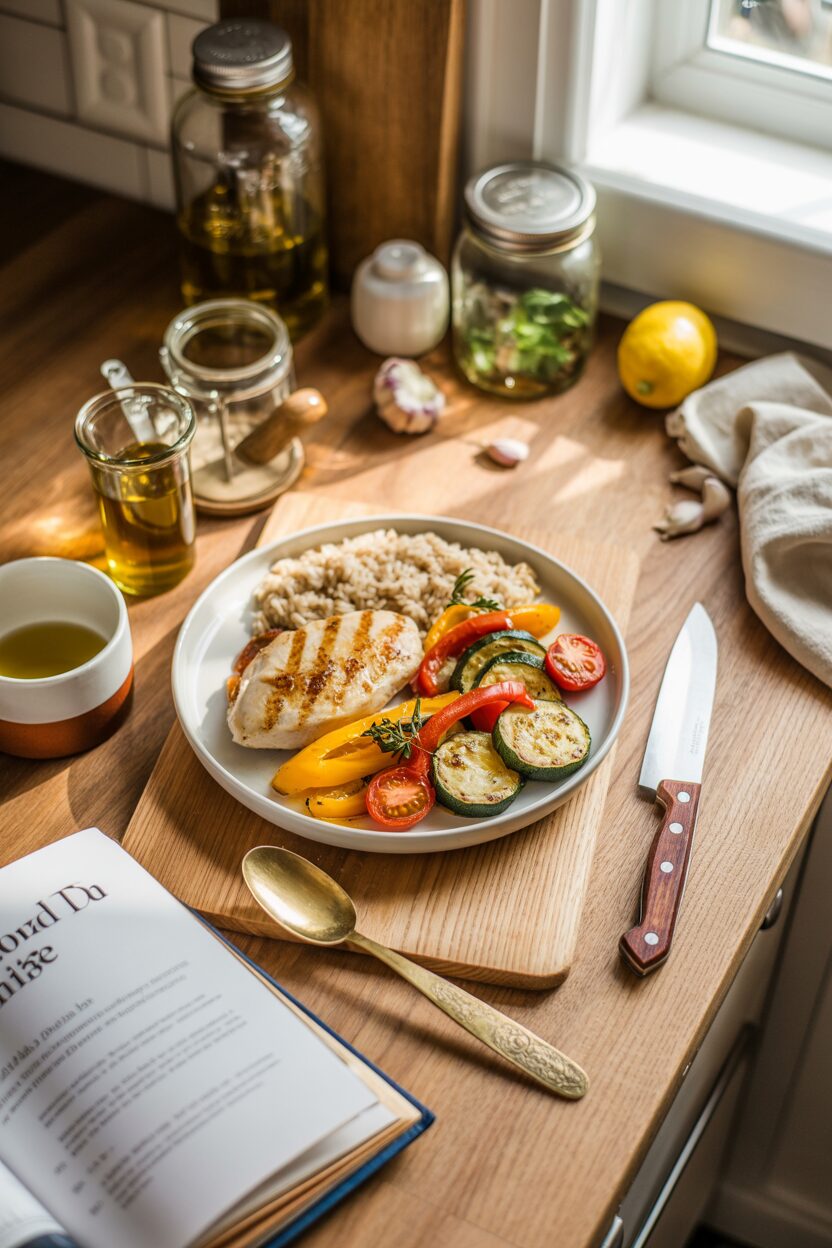
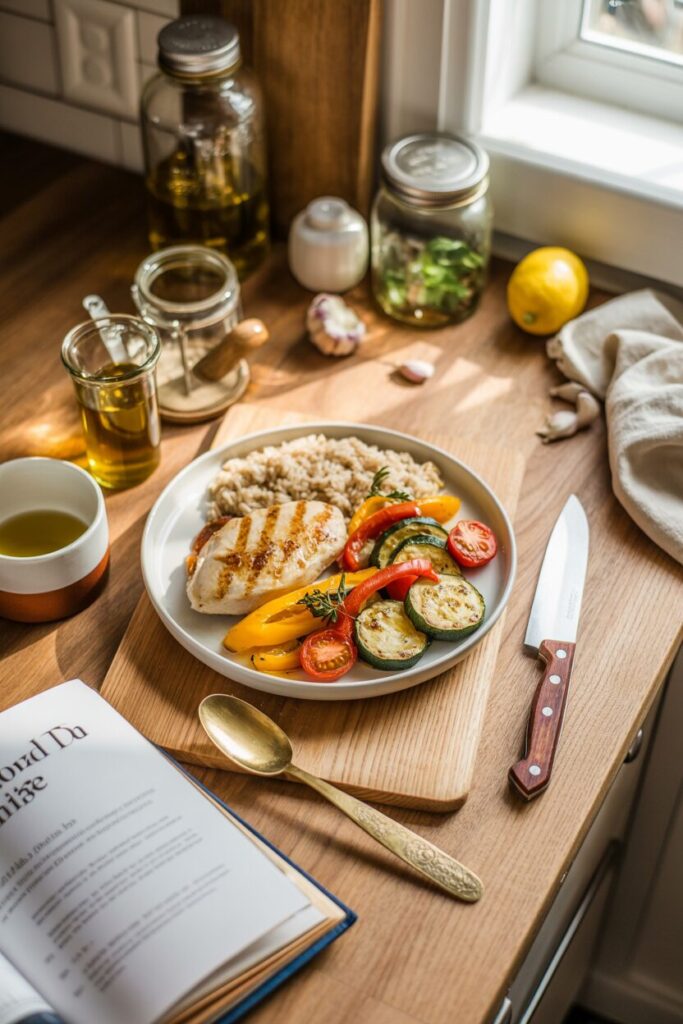
1. Baked Chicken Breast with Roasted Vegetables
Chicken breasts seasoned with salt, pepper, and garlic powder. Place them on [a baking sheet] with chopped vegetables (bell peppers, zucchini, onions). Drizzle everything with olive oil. Bake at 400°F for 25 minutes.
This is the most basic meal that’s still actually good. The vegetables roast in the chicken juices, making them flavorful without extra work. Use [an instant-read thermometer] so you know when chicken hits 165°F—takes the guesswork out completely. [Get Full Recipe]
2. Lemon-Herb Chicken Thighs
Chicken thighs (more forgiving than breasts), lemon slices, fresh or dried herbs. Place thighs on a baking sheet, top with lemon and herbs, bake at 375°F for 30-35 minutes.
Chicken thighs have more fat than breasts, so they stay juicy even if you slightly overcook them. That’s a feature when you’re learning, not a bug.
3. Chicken and Vegetable Stir-Fry
Cube chicken breast, cook it in a hot skillet with whatever vegetables you’ve got, add low-sodium soy sauce and garlic. Serve over brown rice.
The key to stir-fry is having everything prepped before you start cooking. It moves fast once you’re at the stove. Cut everything first, then cook.
4. Sheet Pan Chicken Fajitas
Sliced chicken breast, bell peppers, onions, fajita seasoning. Spread on a baking sheet, roast at 425°F for 20 minutes. Serve with whole wheat tortillas.
Everything cooks on one pan at the same temperature. No complicated timing, no multiple pans to juggle. This is beginner cooking at its finest.
5. Grilled Chicken with Simple Salad
Season chicken breasts, grill or pan-sear for 6-7 minutes per side. Serve over mixed greens with whatever vegetables you like, drizzle with olive oil and lemon juice.
If you don’t have a grill, a hot skillet works fine. Just get it smoking hot before adding the chicken, and don’t move it around constantly—let it develop a crust.
If you’re getting comfortable with chicken, you’ll also love [these herb-roasted chicken thighs with root vegetables] or [this Mediterranean chicken with olives]—both are super forgiving and ridiculously flavorful.
Fish Made Simple
6. Baked Salmon with Lemon
Salmon fillets, lemon slices, salt, pepper. Place salmon on [parchment paper] on a baking sheet, top with lemon, bake at 400°F for 12-15 minutes.
Fish seems scary to beginners, but salmon is one of the hardest to mess up. It’s fatty, so it stays moist, and the timing is forgiving. According to research published in Circulation, eating fish twice a week significantly reduces heart disease risk.
7. Pan-Seared Tilapia
Tilapia fillets seasoned with salt, pepper, and paprika. Heat oil in a skillet, cook fish for 3-4 minutes per side. Serve with steamed vegetables.
Tilapia cooks so fast that you barely have time to mess it up. Seriously, it’s done before you realize you started. Keep the heat medium-high and don’t walk away.
8. Baked Cod with Tomatoes
Cod fillets topped with diced tomatoes, garlic, and basil. Bake at 400°F for 15 minutes. The tomatoes keep the fish moist and add flavor without extra effort.
Use fresh tomatoes in summer, canned diced tomatoes the rest of the year. Both work perfectly fine.
9. Shrimp and Vegetable Skewers
Thread shrimp and vegetable chunks (zucchini, bell peppers, onions) onto skewers. Brush with olive oil, season, grill or broil for 8-10 minutes. [Get Full Recipe]
Buy the peeled, deveined shrimp. Yeah, it costs more, but the time you save is worth every penny when you’re learning.
10. Tuna Salad Lettuce Wraps
Canned tuna mixed with diced celery, a tiny bit of mayo (or Greek yogurt), and lemon juice. Spoon into lettuce leaves, wrap, eat.
This barely counts as cooking, but it’s a complete meal that supports heart health. Sometimes simple is exactly what you need.
Ground Turkey Options
11. Turkey Chili
Ground turkey, canned beans, canned tomatoes, chili powder. Brown the turkey in [a pot], add everything else, simmer for 20 minutes.
Chili is basically impossible to mess up. Too thick? Add water. Too thin? Simmer longer. Not flavorful enough? Add more spices. It’s the most forgiving meal in existence.
12. Turkey Meatballs
Ground turkey, breadcrumbs, egg, Italian seasoning. Mix, form into balls, bake at 375°F for 20 minutes. Serve with marinara and whole wheat pasta.
Use [a cookie scoop] to portion meatballs evenly—they’ll cook at the same rate, and you don’t have to touch raw meat as much. Win-win.
13. Turkey and Vegetable Skillet
Brown ground turkey, add frozen mixed vegetables, season with garlic powder and herbs. Cook until vegetables are heated through. Serve over brown rice.
This is my go-to when I’m tired and can’t think. It’s basically throwing things in a pan and stirring occasionally. Still healthy, still delicious.
14. Stuffed Bell Peppers
Halve bell peppers, fill with a mixture of cooked ground turkey, brown rice, and diced tomatoes. Bake at 375°F for 25-30 minutes.
The peppers become soft and sweet as they bake, and the filling is basically just stirring things together. No real cooking skill required.
15. Turkey Lettuce Wraps
Brown ground turkey with ginger and garlic, add diced water chestnuts for crunch. Spoon into lettuce leaves, top with shredded carrots.
This feels way fancier than the effort required. People will think you know what you’re doing when really you just browned some meat and chopped some vegetables.
For more ground turkey inspiration, check out [this turkey meatloaf with vegetables] or [these turkey burger patties with sweet potato fries]—both are stupid simple and way healthier than beef versions.
Plant-Based Beginner Meals
16. Black Bean Tacos
Heat canned black beans with cumin and garlic powder. Serve in corn tortillas with diced tomatoes, lettuce, and avocado.
Beans straight from the can taste fine, but heating them with spices makes them taste like you tried. Which you barely did, but nobody needs to know that.
17. Chickpea and Vegetable Curry
Sauté onion and garlic, add curry powder, canned chickpeas, canned tomatoes, and a splash of coconut milk. Simmer for 15 minutes. Serve over brown rice.
Use [jarred curry paste] if curry powder feels too complicated. Just add a tablespoon and you’re done. Instant flavor with zero effort.
18. Lentil Soup
Sauté carrots and celery, add lentils, canned tomatoes, and broth. Simmer for 25-30 minutes until lentils are soft.
Lentils don’t need soaking like other beans, making them perfect for beginners. Red lentils cook fastest (20 minutes), brown and green take slightly longer.
19. Pasta Primavera
Cook whole wheat pasta, toss with sautéed vegetables (whatever you like), garlic, olive oil, and a squeeze of lemon. That’s it.
The pasta water is starchy and helps everything stick together. Save a cup before draining, then add it back a little at a time if the pasta seems dry.
20. Vegetable Fried Rice
Day-old brown rice, scrambled eggs, frozen mixed vegetables, soy sauce, garlic. Fry everything together in a hot skillet.
Fresh rice gets mushy in fried rice. Day-old rice that’s been refrigerated has dried out slightly and fries up perfectly. Make extra rice one night specifically for this.
Simple One-Pot Meals
21. Chicken and Rice Casserole
Chicken thighs, brown rice, broth, frozen vegetables. Everything goes in [one pot], bake covered at 375°F for 45 minutes.
This is dump-and-bake cooking. Mix ingredients, put it in the oven, set a timer, forget about it. Dinner cooks itself while you do literally anything else.
22. Turkey and Bean Chili
Ground turkey, canned beans (any kind), canned tomatoes, chili powder. Brown turkey, add everything else, simmer.
IMO, chili gets better the next day, so make a double batch and eat it all week. One cooking session, multiple meals.
23. Vegetable Soup
Whatever vegetables you have, diced. Sauté in olive oil, add broth, simmer until vegetables are soft. Season with herbs.
Soup is the ultimate clean-out-the-fridge meal. Nothing goes to waste, and it all tastes good together when you add enough broth and seasoning.
24. Sausage and Vegetable Skillet
Chicken sausage (pre-cooked), bell peppers, onions, zucchini. Slice everything, sauté in a skillet with olive oil for 10-15 minutes.
Pre-cooked sausage means you’re just heating everything through, not worrying about food safety. Way less stress for beginners.
25. Baked Egg Cups
Whisk eggs with diced vegetables and a little cheese. Pour into [a muffin tin], bake at 350°F for 20 minutes. [Get Full Recipe]
These keep in the fridge for days. Grab two for breakfast, microwave for 30 seconds, done. Meal prep that doesn’t feel like meal prep.
The Shopping Strategy
Beginners often overcomplicate grocery shopping. Here’s what you actually need to keep stocked:
Proteins: Chicken breasts, chicken thighs, ground turkey, canned tuna, eggs, canned beans
Grains: Brown rice, whole wheat pasta, quinoa
Vegetables: Whatever’s on sale—frozen works just as well as fresh for most recipes
Pantry staples: Olive oil, salt, pepper, garlic powder, Italian seasoning, cumin, chili powder
Canned goods: Tomatoes, beans, broth
That’s your foundation. Everything on this list uses some combination of these basics. No hunting for weird ingredients, no spending a fortune.
Basic Cooking Techniques Nobody Explains
These are the things cookbooks assume you know but beginners definitely don’t:
Sautéing: Medium-high heat, small amount of oil, keep food moving in the pan. Food should sizzle when it hits the pan.
Roasting: High heat (400-450°F), food spread in a single layer on a baking sheet, usually with oil. Don’t crowd the pan or vegetables steam instead of roast.
Baking: Moderate heat (350-375°F), food usually covered or in a dish. More gentle than roasting.
Seasoning: Salt and pepper are not optional. They’re not “extra flavor”—they’re baseline. Use more than you think you need.
FYI, [this set of measuring spoons] helps with seasoning until you can eyeball it. Start with a teaspoon of most dried spices per pound of protein or per recipe serving four.
Common Beginner Mistakes (And How to Avoid Them)
Mistake 1: Not reading the entire recipe first. Read it all before you start cooking. Nothing worse than getting halfway through and realizing you need something marinated for an hour.
Mistake 2: Crowding the pan. Whether you’re sautéing or roasting, give food space. Crowded food steams instead of browns.
Mistake 3: Using low heat for everything. Most cooking happens at medium to medium-high heat. Low heat takes forever and doesn’t develop flavor.
Mistake 4: Not tasting as you go. Taste before serving. Needs salt? Add it. Needs acid? Squeeze some lemon. You’re in control.
Mistake 5: Expecting perfection. Your first attempt at anything will be mediocre. That’s normal. You get better by doing it repeatedly, not by doing it perfectly once.
Meal Prep for People Who Hate Meal Prep
You don’t need to spend all Sunday cooking to eat well during the week. Here’s the lazy person’s meal prep:
Sunday tasks (30 minutes):
- Cook a big batch of brown rice or quinoa
- Roast a sheet pan of vegetables
- Grill or bake 4-6 chicken breasts
- Chop vegetables for the week
Weeknight assembly (10 minutes): Grab rice, vegetables, protein. Reheat. Add sauce or seasoning. Eat.
You’re not cooking every night. You’re assembling components you’ve already cooked. Way less intimidating, way more sustainable.
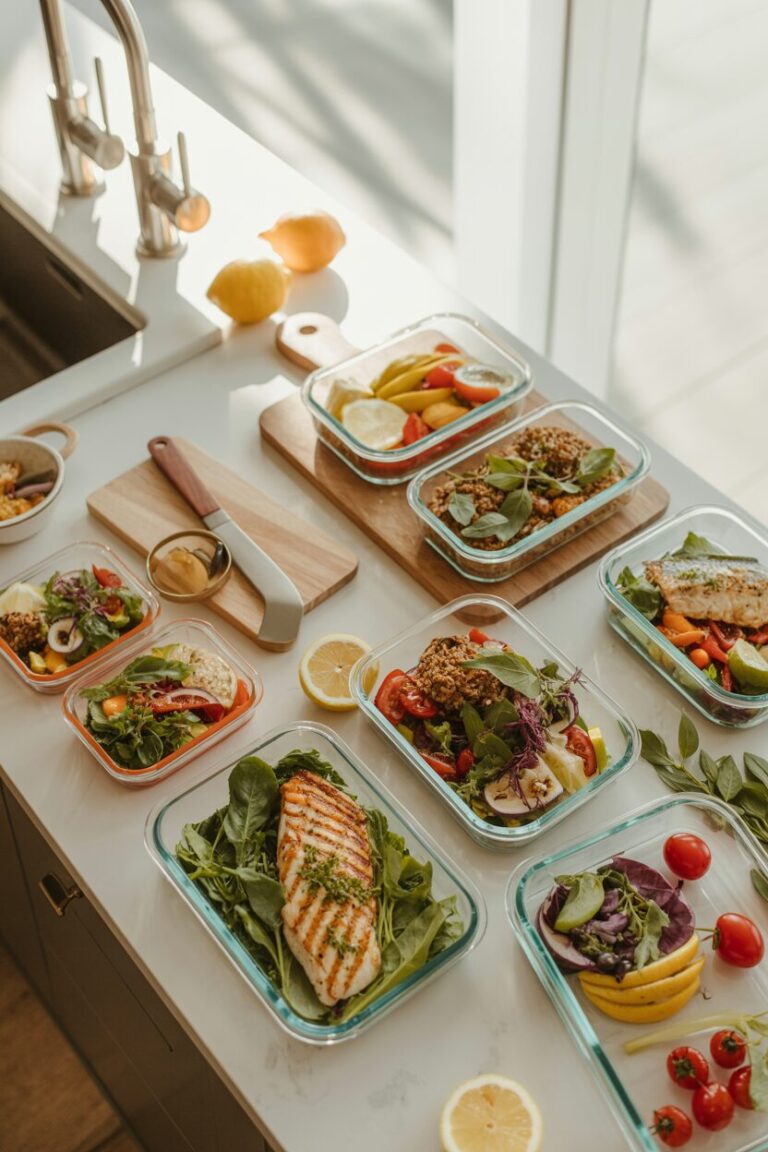
[These glass containers with dividers] keep components separate until you’re ready to heat them. Nothing gets soggy, nothing loses texture.
The Confidence Builder
Here’s what nobody tells you: cooking confidence comes from repetition, not from following complicated recipes perfectly. Make the same five meals until you can do them without looking at a recipe. Then add five more.
These 25 meals work because they’re simple enough to master quickly. Once you’ve made baked chicken with vegetables ten times, you can start experimenting—different seasonings, different vegetables, different grains.
But you can’t experiment until you’re comfortable with the basics. Master these, then branch out. There’s no rush.
When Things Go Wrong
Sometimes you’ll burn things. Sometimes you’ll undersalt. Sometimes dinner will just be mediocre. That’s part of learning.
Burnt food: Scrape off the burnt parts if possible, or just order pizza and try again tomorrow. It happens.
Too salty: Add acid (lemon juice or vinegar) or something bland (rice, pasta, plain yogurt) to balance it.
Too bland: Add salt, then acid, then fat (butter or olive oil). Usually one of those fixes it.
Overcooked: Can’t fix it, but you learn for next time. Write down what went wrong so you remember.
The goal isn’t perfection. It’s getting comfortable in the kitchen so you can feed yourself food that supports your heart health instead of destroying it.
Related Recipes You’ll Love
Ready to expand your repertoire? Here are some recipes that build on these basic techniques:
Next-Level Chicken:
- [Slow cooker chicken with vegetables and herbs]
- [One-pan lemon garlic chicken with asparagus]
Easy Fish Dinners:
- [Baked cod with tomato-olive tapenade]
- [Sheet pan salmon with roasted Brussels sprouts]
Simple Plant-Based Meals:
- [Quinoa Buddha bowl with tahini dressing]
- [Three-bean vegetarian chili]
The Bottom Line
Heart-healthy cooking for beginners isn’t about fancy techniques or expensive ingredients. It’s about simple meals made from real food that you can actually execute without stress.
These 25 meals work because they’re genuinely easy—minimal ingredients, basic techniques, hard to mess up. They support your cardiovascular health while you build cooking skills and confidence.
Start with 3-4 meals that sound doable. Make them this week. Once you’re comfortable, add a few more. Within a month, you’ll have a solid rotation of meals you can make without thinking.
Your heart doesn’t care if you’re using advanced culinary techniques. It cares that you’re eating real food cooked at home instead of processed junk or restaurant meals loaded with sodium and saturated fat.
You’ve got this. Start simple, build confidence, get better over time. That’s how everyone learns to cook—one basic meal at a time.