15 Low-Sodium Dinners That Still Taste Amazing
Low-sodium cooking has this reputation for being bland, boring, and generally punishing yourself at mealtime. I get it. When my doctor told me to cut back on sodium, my first thought was “great, so I’m eating cardboard for the rest of my life?”
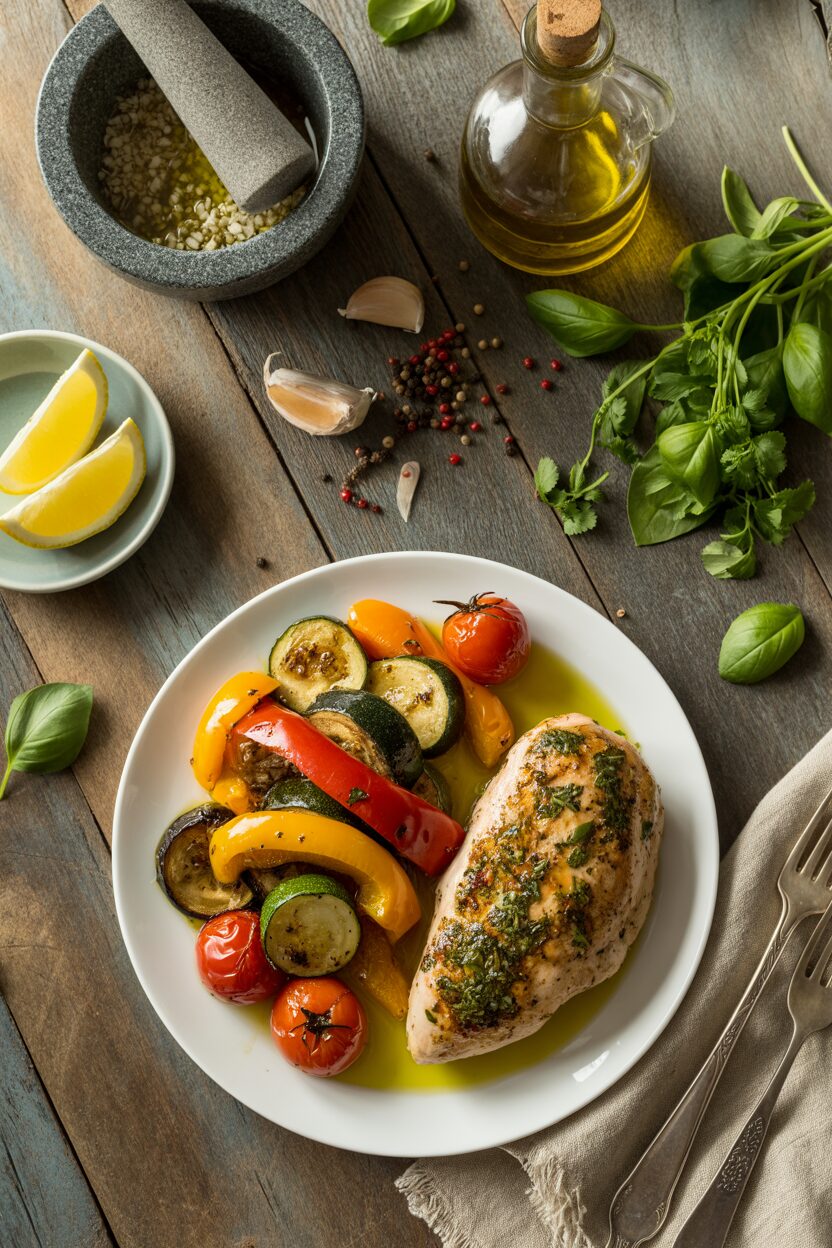
Turns out, that’s completely wrong. The problem isn’t removing salt—it’s that most people rely on it as their only seasoning. Once you learn how to build flavor with herbs, spices, acid, and aromatics, low-sodium food can actually taste better than the salty stuff you’ve been eating.
These 15 dinners prove it. They’re all under 500mg of sodium per serving (way below the 2,300mg daily limit), and they’re legitimately delicious.
Why Low-Sodium Actually Matters
Before we get to the recipes, let’s talk about why you might want to care about sodium intake. Too much sodium raises blood pressure, makes your body retain fluid, and forces your heart to work harder than it should.
According to the American Heart Association’s guidelines, most Americans consume 3,400mg of sodium daily—almost 50% more than recommended. And 70% of that comes from restaurant and processed foods, not your salt shaker.
Cooking at home with fresh ingredients automatically cuts your sodium intake dramatically. These recipes take it even further by relying on flavor-building techniques that don’t need salt.
The Flavor-Building Framework
Here’s what nobody tells you about low-sodium cooking: you need to layer flavors. One herb or spice isn’t enough. You need a combination of:
Aromatics: Garlic, onions, shallots, ginger—they build a flavor base that makes everything else taste better.
Acids: Lemon juice, lime juice, vinegar—they brighten flavors and make food taste more complex without adding sodium.
Herbs and spices: Fresh or dried, they add depth and complexity. Don’t be shy—use more than you think you need.
Healthy fats: Olive oil, avocado, nuts—they carry flavors and make food satisfying.
Get these four elements working together, and you won’t miss the salt. I promise.
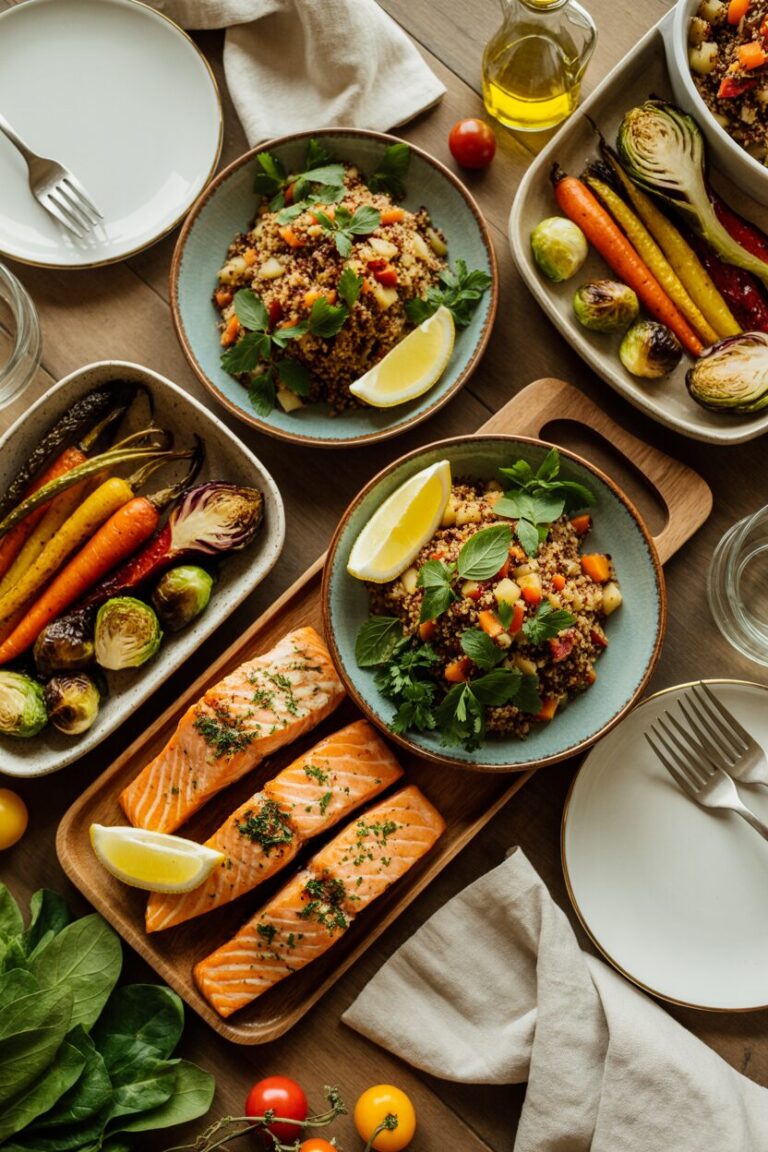
1. Herb-Crusted Baked Salmon with Roasted Vegetables
Salmon rubbed with a mixture of fresh dill, parsley, garlic, and lemon zest. Roast it alongside asparagus, cherry tomatoes, and red onion. The herbs create this crust that’s intensely flavorful, and the lemon brightens everything.
I use [this silicone basting brush] to coat the salmon evenly with olive oil before adding the herb mixture—way better than those old bristle brushes that shed everywhere.
Salmon naturally contains some sodium (about 50-80mg per serving), but it’s so low compared to processed foods that it’s basically negligible. [Get Full Recipe]
2. Grilled Chicken with Chimichurri
Chimichurri is this Argentinian sauce made from parsley, cilantro, garlic, olive oil, and vinegar. It’s bright, herbaceous, and so flavorful that you forget there’s no salt in it. Grill chicken breasts, slice them, and drench everything in chimichurri.
[This food processor] makes chimichurri in 30 seconds—just pulse everything together and you’re done.
The acid from the vinegar and the aromatics from the garlic and herbs create this punch of flavor that makes salt seem boring by comparison.
3. Lemon-Garlic Shrimp with Zucchini Noodles
Shrimp sautéed with tons of garlic, lemon juice, red pepper flakes, and parsley. Serve it over zucchini noodles (use [this spiralizer] if you don’t have one yet). The lemon and garlic are so assertive that you don’t even think about salt.
Shrimp does contain natural sodium (about 100-120mg per serving), but when you’re making it at home without added salt, it stays well within healthy limits.
Fresh shrimp is better than frozen for this—less water retention, better texture. But frozen works fine if that’s what you’ve got.
4. Spiced Lentil and Vegetable Stew
Lentils cooked with cumin, coriander, turmeric, paprika, and a ton of garlic. Add carrots, celery, tomatoes, and spinach. The spices create this warm, complex flavor that doesn’t need salt to taste complete.
According to research published in the Journal of Human Hypertension, replacing salt with herbs and spices can significantly lower blood pressure without reducing meal satisfaction.
I make this in [a large Dutch oven]—it’s perfect for soups and stews, and the heavy lid traps all that flavor inside.
5. Baked Cod with Tomato-Caper Sauce
Cod fillets topped with a quick sauce made from fresh tomatoes, garlic, capers (rinsed to remove excess sodium), and basil. Bake for 15 minutes. The capers add a briny punch that mimics saltiness without loading up on sodium.
Rinse capers thoroughly under cold water—removes about 50% of their sodium while keeping all that tangy flavor.
Fresh tomatoes work best here, but canned work too. Just make sure you get the no-salt-added version.
If you’re into simple fish dinners, you’ll also love [this lemon-herb tilapia with green beans] or [these garlic butter shrimp skewers]—both are stupid simple and packed with flavor.
6. Moroccan-Spiced Chicken with Roasted Cauliflower
Chicken thighs rubbed with cumin, coriander, cinnamon, paprika, and a touch of cayenne. Roast alongside cauliflower florets tossed in the same spice blend. The warm spices create this incredible aroma that makes your whole house smell amazing.
I use [this spice grinder] to make my own spice blends—store-bought blends often contain hidden sodium, but grinding your own means you control exactly what goes in.
Chicken thighs stay juicier than breasts, making them more forgiving if you accidentally overcook them. Plus, they’re cheaper.
7. Quinoa-Stuffed Bell Peppers
Bell peppers filled with quinoa, black beans, corn, onions, garlic, cumin, and fresh cilantro. Top with a squeeze of lime. The combination of textures and flavors makes this feel like a complete meal without needing cheese or salt.
Quinoa has barely any sodium naturally (less than 10mg per cup cooked), making it perfect for low-sodium cooking.
Use [this rice cooker] for the quinoa—it has a quinoa setting that gets it perfect every time without babysitting. [Get Full Recipe]
8. Herb-Roasted Pork Tenderloin with Sweet Potatoes
Pork tenderloin rubbed with rosemary, thyme, garlic, and black pepper. Roast it with sweet potato chunks that have been tossed in olive oil and smoked paprika. The herbs penetrate the meat while it cooks, creating this savory crust.
Check the internal temp with [an instant-read thermometer]—pork should hit 145°F. Overcooking makes it dry and sad.
Sweet potatoes bring natural sweetness that plays perfectly against the savory herbs. They’re also loaded with potassium, which helps balance sodium in your body.
9. Ginger-Garlic Tofu Stir-Fry
Press and cube tofu, stir-fry it with massive amounts of fresh ginger and garlic, then add whatever vegetables you’ve got. Finish with a splash of rice vinegar and sesame oil (just a tiny bit—sesame oil is strong).
[This tofu press] makes pressing tofu hands-off—no more stacking books on plates and hoping nothing slides off.
The ginger-garlic combination is so powerful that you genuinely don’t miss soy sauce. And if you really want that umami flavor, use coconut aminos instead—way less sodium than regular soy sauce.
10. Turkey Meatballs with Fresh Tomato Sauce
Ground turkey mixed with fresh parsley, basil, garlic, and a tiny bit of breadcrumb. Bake them, then simmer in a sauce made from fresh tomatoes, more garlic, and oregano.
Store-bought marinara has 300-600mg of sodium per half cup. Making your own with fresh tomatoes brings it down to basically zero. The time difference? Maybe 10 minutes.
I portion the meatballs with [this cookie scoop]—weird tool for meatballs, but it works perfectly and keeps your hands cleaner.
Looking for more ways to use ground turkey? Try [these turkey lettuce wraps with Asian slaw] or [this turkey chili with beans]—both are super flavorful without relying on salt.
11. Lemon-Herb Chicken and Vegetable Skewers
Cube chicken breast, thread it on skewers with zucchini, bell peppers, and red onion. Marinate everything in lemon juice, olive oil, garlic, and fresh herbs for 30 minutes. Grill or broil.
The marinade penetrates the chicken and vegetables, infusing them with flavor from the inside out. Way more effective than just seasoning the surface.
[These flat metal skewers] are better than wooden ones—they conduct heat, cooking food from the inside, and nothing spins around when you flip them.
12. Baked Eggplant Parmesan (No Salt Added)
Slice eggplant, brush with olive oil, coat in Italian herbs and breadcrumbs, then bake instead of frying. Layer with no-salt-added tomato sauce and just a little fresh mozzarella. It’s lighter than traditional eggplant parm and way lower in sodium.
Eggplant absorbs flavors like crazy, so the herbs and garlic in the sauce are all you need. Salt the eggplant before cooking though—it draws out moisture and bitterness (then rinse it off).
[This mandoline slicer] cuts the eggplant into perfect, even slices. Just watch your fingers—those blades are aggressive. [Get Full Recipe]
13. Cilantro-Lime Grilled Fish Tacos
White fish (cod, tilapia, mahi-mahi) marinated in lime juice, cilantro, and cumin. Grill it, flake it into corn tortillas, and top with shredded cabbage, more cilantro, avocado, and a squeeze of lime.
The lime juice does double duty—it marinates the fish and acts as a finishing sauce. Acid is your best friend in low-sodium cooking.
Corn tortillas naturally have less sodium than flour ones. Check the label though—some brands sneak in way more salt than necessary.
14. Mushroom and Barley Soup
Mushrooms, barley, carrots, celery, onions, garlic, and thyme simmered in low-sodium vegetable broth. Mushrooms have this umami quality that makes soups taste rich and satisfying without needing salt.
Use [this immersion blender] to partially blend the soup if you want it creamier—leaves some texture while making it more cohesive.
Dried mushrooms (like porcini or shiitake) add even more depth. Rehydrate them in hot water, chop them up, and throw them in with the fresh ones.
15. Herb-Crusted Pork Chops with Roasted Brussels Sprouts
Pork chops rubbed with sage, rosemary, and garlic. Pan-sear them, then finish in the oven. Serve alongside Brussels sprouts that have been roasted with olive oil and balsamic vinegar.
The balsamic vinegar on the Brussels sprouts caramelizes in the oven, creating this sweet-tangy glaze that’s incredible. IMO, it’s better than any salt-based seasoning.
[This oven-safe skillet] lets you sear on the stovetop and finish in the oven without transferring pans—fewer dishes, better crust on the meat.
The Herbs and Spices You Actually Need
You don’t need 50 different spices to make low-sodium food taste good. Here are the essentials that show up in basically every recipe:
Fresh herbs: Parsley, cilantro, basil, dill—they add brightness and complexity.
Dried spices: Cumin, paprika, garlic powder, black pepper, oregano, thyme—these are your everyday workhorses.
Aromatics: Fresh garlic, onions, ginger—never skip these.
Acids: Lemons, limes, vinegar (balsamic, red wine, rice)—they make everything else taste better.
I keep my spices in [these glass jars with labels]—you can actually see what you have, and they stay fresh way longer than those flimsy supermarket containers.
Making Low-Sodium Sustainable
Here’s the thing: if you go from eating 3,400mg of sodium a day to 500mg overnight, you’re going to hate it. Your taste buds need time to adjust.
Start by cutting back gradually. Cook at home more often. Use half the salt a recipe calls for. Add herbs and citrus to compensate. After 2-3 weeks, your taste buds recalibrate, and suddenly salty food tastes too salty.
Read labels religiously: “Low-sodium” means 140mg or less per serving. “Reduced sodium” just means 25% less than the original—which could still be way too much.
Watch the sneaky sources: Bread, cheese, condiments, canned goods—they all hide shocking amounts of sodium. Switch to no-salt-added versions when possible.
Don’t eat out as much: Restaurant food is sodium central. Even “healthy” restaurant meals often pack 2,000mg or more.
FYI, [this digital kitchen scale] helps with portion control—restaurants serve 2-3x normal portions, so even when cooking at home, people often overdo it without realizing.
When You Really Miss Salt
Some days you just want something that tastes salty. Here are your options:
Potassium chloride salt substitutes: They taste pretty close to regular salt and might help with blood pressure. Check with your doctor first though—some medications don’t play nice with extra potassium.
Seaweed: Nori, kelp, dulse—they have a naturally salty, briny flavor without much actual sodium.
Nutritional yeast: Adds a savory, almost cheesy flavor to dishes. Great on popcorn, pasta, or roasted vegetables.
Miso paste (low-sodium): Still has sodium, but you use so little that it’s manageable. Adds incredible umami depth to soups and sauces.
Use these sparingly as flavor boosters, not as your primary seasoning method.
Dining Out on a Low-Sodium Diet
Restaurant meals are tough, but not impossible. Here’s what works:
Ask for no salt: Most places will accommodate if you ask nicely.
Request sauces on the side: Sauces are sodium bombs. Drizzle lightly instead of drowning your food.
Choose grilled, baked, or roasted: These cooking methods don’t rely on salt like fried or sautéed foods often do.
Skip the bread basket: Restaurant bread is loaded with sodium, and you’re just filling up on empty calories anyway.
Bring your own seasonings: Yeah, it’s a little extra, but bringing a small container of your own herb blend means you can season your food without relying on salt.
Related Recipes You’ll Love
Looking for more low-sodium inspiration? Here are some recipes that use the same flavor-building techniques:
More Fish and Seafood:
- [Lemon-garlic baked tilapia with asparagus]
- [Grilled tuna with sesame-ginger glaze]
Poultry Done Right:
- [Mediterranean chicken with olives and tomatoes]
- [Herb-roasted chicken thighs with root vegetables]
Plant-Based Options:
- [Spiced chickpea curry with spinach]
- [Black bean and quinoa stuffed peppers]
The Bottom Line
Low-sodium cooking isn’t about deprivation. It’s about learning to taste food properly—recognizing that salt was masking flavors, not enhancing them.
These 15 dinners work because they build flavor through layers: aromatics, acids, herbs, spices, and healthy fats. Each element contributes something, and together they create food that’s way more interesting than anything you could make with just salt.
Start with one or two recipes that sound appealing. Make them this week. Pay attention to how they taste. Once you realize that low-sodium food can be genuinely delicious, the whole thing gets way easier.
Your blood pressure, your heart, and honestly your taste buds will thank you. Salt’s been hogging the spotlight for too long—time to let the other flavors shine.