
10 Heart-Healthy Habits That Start in the Kitchen
Your kitchen isn’t just a place where you cook—it’s command central for your heart health. Seriously, most of the heavy lifting when it comes to protecting your ticker happens right there between your stove and your fridge. I learned this the hard way after my dad’s cholesterol scare a few years back. We thought eating out less would magically solve everything, but turns out, what happens in your own kitchen matters way more than whether you’re dining in or hitting up restaurants.
The truth? You don’t need fancy superfoods or expensive meal delivery services. What you need are solid habits that become second nature. Think of these like brushing your teeth—boring on paper, life-changing in practice.
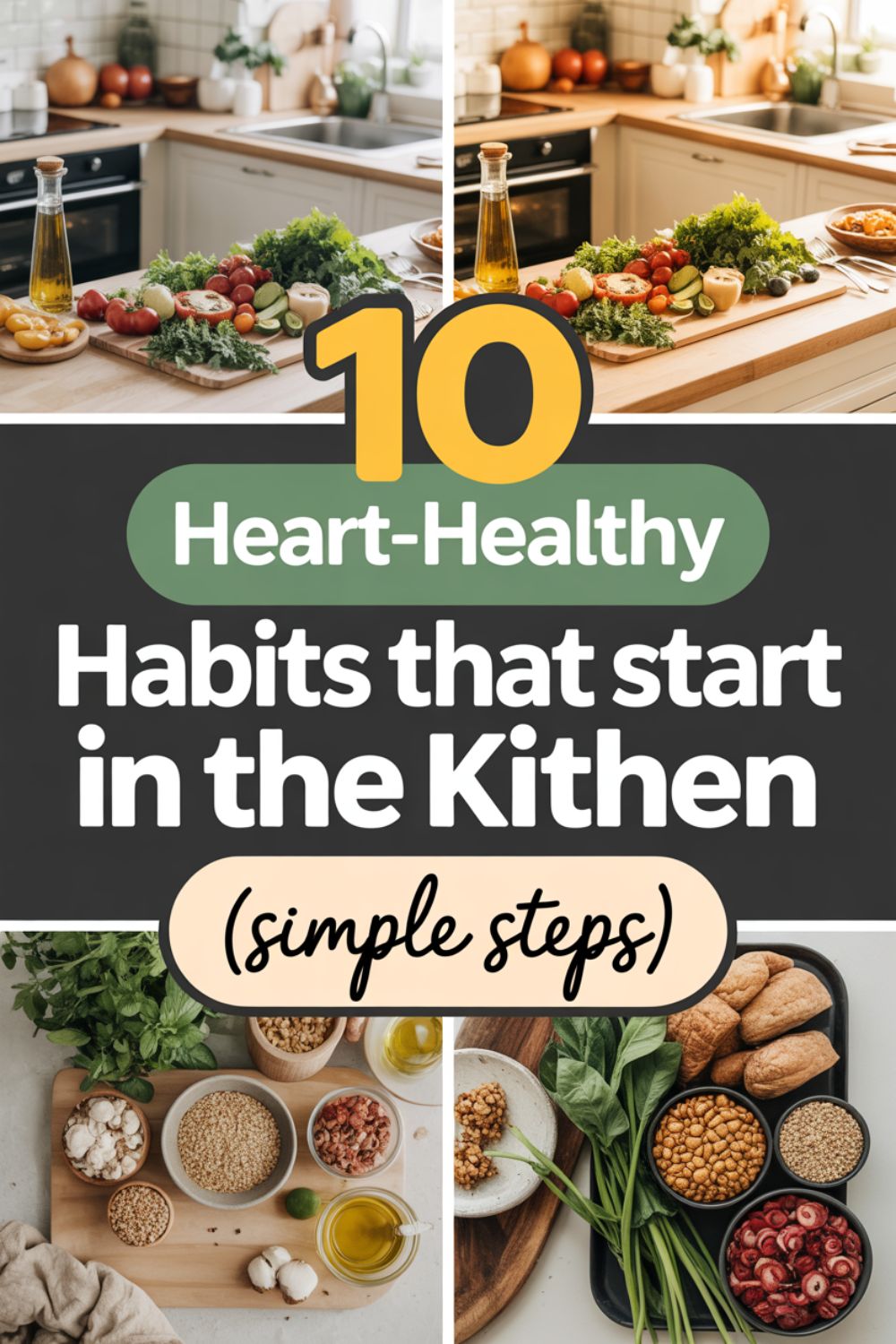
1. Stock Your Pantry Like You Actually Care About Your Arteries
Ever notice how you eat whatever’s easiest to grab? That’s not laziness—that’s human nature. So why not make the easy choice the healthy one? I completely overhauled my pantry after realizing I had three types of chips but zero canned beans. Not my finest moment.
Start with the basics: whole grains like quinoa, brown rice, and oats. Add canned or dried beans—kidney, black, chickpeas, the whole gang. Grab some low-sodium canned tomatoes and tomato sauce. These ingredients become your building blocks for heart-healthy meals that don’t require a culinary degree.
Keep nuts and seeds around too—almonds, walnuts, chia seeds, flaxseeds. I use this airtight container set to store them because nothing’s sadder than stale walnuts. Trust me on this.
The beauty of a well-stocked pantry? When you’re tired and tempted to order greasy takeout, you can throw together something decent in 20 minutes. **Get Full Recipe** for simple pantry-based meals that actually taste good.
🔥 The Ultimate Heart-Healthy Kitchen Equipment Guide
Setting up your kitchen with the right tools can literally transform your cooking game. After testing dozens of gadgets and appliances, I put together a comprehensive guide on the essential equipment that makes heart-healthy cooking faster, easier, and way more enjoyable.
Inside you’ll discover:
✓ The one appliance that cuts meal prep time by 60%
✓ Budget-friendly alternatives to expensive gadgets
✓ My top 5 tools under $30 that I use daily
2. Make Olive Oil Your Kitchen MVP
If your cooking oil could use a promotion, let’s talk about olive oil. According to research on healthy fats, swapping butter and other saturated fats for olive oil is one of the simplest ways to improve your cholesterol profile.
I’m not saying you need to spend $40 on imported Italian gold. A decent extra virgin olive oil from your regular grocery store works perfectly fine for most cooking. Use it for sautéing vegetables, making salad dressings, and even drizzling over finished dishes for extra flavor.
Here’s what nobody tells you: olive oil has a moderate smoke point, so it’s not ideal for super high-heat cooking. For that, canola oil is your friend. But for everyday cooking? Olive oil is where it’s at. I keep mine in a dark glass bottle with a pour spout—makes it easier to control portions and keeps the oil fresh longer.
The Quick Switch Strategy
Start replacing your current cooking fat with olive oil gradually. Use it for your morning eggs, your lunch stir-fry, your dinner roasted veggies. Before you know it, you’ve made a massive change without really thinking about it.
Premium Cold-Pressed Extra Virgin Olive Oil Dispenser Set
This is hands-down the best olive oil setup I’ve ever used. The dark glass bottle protects the oil from light degradation (which ruins quality fast), and the precision pour spout means you’re not drowning everything in oil or creating a greasy mess on your counter.
Why I Actually Use This Daily:
- No-drip pour spout – Seriously game-changing for portion control
- UV-protected dark glass – Keeps oil fresh 3x longer than clear bottles
- 500ml perfect size – Not too big, refills from bulk bottles easily
- Easy-grip ergonomic design – My mom with arthritis can use it comfortably
- Dishwasher safe – Because nobody wants to hand-wash oil bottles
3. Prep Your Vegetables Like Your Life Depends On It
Because, well, it kinda does. The Mayo Clinic’s heart-healthy guidelines stress that loading up on vegetables is non-negotiable. But here’s the thing—we all know vegetables are healthy. The problem is actually eating them.
Solution? Prep them when you have energy, not when you’re starving and cranky. Sunday afternoon, I wash and chop bell peppers, carrots, broccoli, whatever’s on sale. Store them in clear containers in the fridge so you actually see them. Out of sight, out of mind—and into the compost bin they go.
Keep some veggies as grab-and-go snacks. Cherry tomatoes, snap peas, baby carrots. These divided containers are perfect for portioning out veggies with a little hummus. Boom—instant healthy snack that requires zero willpower.
Speaking of making vegetables easier, try these **Heart-Healthy Lunch Ideas for Work** that are heavy on the veggies but light on prep time.
4. Embrace the Power of Batch Cooking
Look, I get it. Not everyone wants to spend their Sunday making a week’s worth of meals. But hear me out—cooking in batches doesn’t mean you’re eating the same thing seven days straight. It means you’re cooking components that you can mix and match.
Cook a big pot of quinoa or brown rice. Roast a sheet pan of vegetables. Grill or bake some chicken breast or salmon. Now you’ve got the building blocks for different meals throughout the week. Monday it’s a grain bowl, Wednesday it’s a salad, Friday you add some beans and make a burrito.
The freezer is your secret weapon here. Make a double batch of soup or chili, freeze half. Future you will be ridiculously grateful. I swear by these freezer-safe containers with portion markings—takes the guesswork out of defrosting.
💰 How I Slashed My Grocery Bill by 40% (Without Eating Boring Food)
Real talk: eating heart-healthy doesn’t have to demolish your budget. After months of testing different strategies, I cracked the code on buying quality ingredients without the premium price tag.
You’ll learn exactly:
✓ Which “healthy” foods are total ripoffs (and the cheap swaps)
✓ My secret shopping list that feeds 2 people for under $75/week
✓ The 3 stores I rotate between to maximize savings
For more weeknight shortcuts, check out these **Heart-Healthy Recipes for Busy Weeknights**. They’re designed for people who have jobs and lives and can’t spend hours in the kitchen every evening.
The Two-Hour Sunday Strategy
Set a timer for two hours. That’s it. In that time, you can cook grains, roast vegetables, prep proteins, and wash your produce. Two hours buys you probably 10-12 hours of weeknight cooking time. That’s a return on investment that would make any financial advisor jealous.
5. Learn to Read Nutrition Labels Like You’re Getting Paid For It
Here’s a fun fact: the food industry is really good at making unhealthy stuff sound healthy. “All natural!” “Made with whole grains!” “Low fat!” Cool, but what does the actual nutrition label say?
Focus on three things: sodium, added sugars, and saturated fat. For heart health, you want to minimize all three. The American Heart Association recommends most adults stick to no more than 2,300 mg of sodium daily, ideally closer to 1,500 mg.
Compare brands. Seriously, two cans of tomato sauce sitting right next to each other can have wildly different sodium levels. One might have 300 mg per serving, the other 700 mg. Guess which one I’m buying?
Added sugars are sneaky. They hide in places you wouldn’t expect—pasta sauce, salad dressing, bread. Aim for less than 6 teaspoons (25 grams) per day if you’re a woman, 9 teaspoons (36 grams) if you’re a man. Anything with more than 10 grams of added sugar per serving deserves a hard look.
This skill becomes crucial when you’re building meals that actually lower cholesterol. Try incorporating **Heart-Healthy Foods to Eat Every Week** and checking their labels becomes second nature.
6. Cut the Sodium Without Cutting the Flavor
Nobody wants to eat bland food. Life’s too short for that nonsense. But here’s the deal—most of us are drowning in sodium without even realizing it. Processed foods, restaurant meals, even bread can pack surprising amounts.
Your kitchen gives you control. Instead of salt, I’ve started reaching for other flavor boosters: fresh garlic, herbs like basil and cilantro, citrus zest, vinegar, hot sauce. These ingredients add complexity that straight-up salt just can’t match.
I keep a set of small spice jars with essential herbs and spices right next to my stove—cumin, paprika, oregano, garlic powder, onion powder. When they’re easy to grab, you actually use them.
Try this: for one week, don’t add any salt while cooking. Season with herbs, spices, and citrus instead. At the end of the week, taste something you used to think was normal. It’ll probably taste ridiculously salty. Your taste buds adapt faster than you think.
🍽️ Join Our Heart-Healthy Community!
Want daily recipes, kitchen tips, and heart-healthy meal ideas delivered straight to your phone? Join our WhatsApp channel where we share easy recipes, grocery shopping hacks, and answer your cooking questions in real-time.
Join WhatsApp ChannelLooking for meals that prove low-sodium doesn’t mean low-flavor? These **Low-Sodium Dinners Still Taste Amazing** will change your mind about “diet food.”
If you’re serious about dropping your sodium intake while keeping meals interesting, you might also appreciate **Low-Cholesterol Meals Doctors Actually Recommend** and **Heart-Healthy Dinners That Lower Cholesterol Naturally** for complete meal inspiration.
7. Make Friends with Fatty Fish
Salmon, mackerel, sardines, herring—these fish are loaded with omega-3 fatty acids that your heart absolutely loves. We’re talking reduced inflammation, lower triglycerides, better cholesterol ratios. It’s basically medicine that tastes good.
The standard recommendation is two servings of fatty fish per week. That’s it. Not every day, not even three times a week. Just twice. Totally doable.
If you’re intimidated by cooking fish, start simple. Salmon is nearly impossible to screw up. Season it with salt, pepper, and lemon. Bake at 400°F for 12-15 minutes. Done. A good instant-read thermometer takes the guesswork out—you’re aiming for 145°F internal temp.
The Canned Fish Secret
Not everyone has access to fresh fish, and that’s fine. Canned salmon, tuna, and sardines are legitimate alternatives. They’re shelf-stable, affordable, and pack the same omega-3 punch. Mix them into salads, pasta, or just eat them straight from the can if you’re feeling lazy. No judgment.
Digital Food Scale with Nutritional Calculator
Real talk: this scale changed how I cook. When you’re trying to manage sodium and watch portions without obsessing, having actual measurements beats guessing every single time. Plus the built-in nutritional calculator means you know exactly what you’re eating—no app required.
What Makes This Worth It:
- Built-in nutrition database – Calculates calories, sodium, protein automatically
- Tare function – Weigh ingredients in your cooking bowl, no extra dishes
- Accurate to 1 gram – Perfect for portion control without overthinking
- Large backlit display – Actually readable (unlike my old scale)
- Slim design – Stores in a drawer, doesn’t hog counter space
- USB rechargeable – No more hunting for weird batteries
8. Rethink Your Protein Sources
Red meat isn’t evil, but it’s also not doing your heart any favors if it’s your main protein source. The saturated fat content is the issue. Cutting back doesn’t mean going full vegetarian (unless you want to), it just means getting creative.
Beans and legumes are criminally underrated. Black beans, chickpeas, lentils—these guys are packed with protein and fiber while being basically free of saturated fat. They’re cheap, they last forever in your pantry, and they’re ridiculously versatile.
Try this: aim for one or two meatless meals per week. Not because meat is terrible, but because diversifying your protein sources is smart. Make a black bean burger. Throw chickpeas in a curry. Cook up some lentil soup.
Poultry and fish should be your go-to animal proteins. They’re leaner and better for your cardiovascular system. Just skip the deep-fried versions—grilling, baking, and sautéing are your friends.
Need some convincing that meatless meals can be satisfying? Check out **Heart-Healthy Breakfasts Under 300 Calories**—several are plant-based and actually filling.
9. Master the Art of Healthy Swaps
You don’t have to completely overhaul everything you eat. Sometimes small swaps make a massive difference. White rice → brown rice. Regular pasta → whole wheat pasta. Sour cream → Greek yogurt. These aren’t revolutionary changes, but they add up.
Swap full-fat dairy for low-fat or fat-free versions. Yeah, I know, it sounds like deprivation. But modern low-fat dairy actually tastes decent. Greek yogurt in particular is a powerhouse—high in protein, lower in fat, works in both sweet and savory dishes.
Instead of butter on your toast, try mashed avocado. Instead of creamy salad dressing, make a vinaigrette with olive oil and balsamic vinegar. A good salad dressing shaker bottle makes homemade dressings stupidly easy—throw in oil, vinegar, mustard, shake, done.
When baking, swap half the butter or oil for applesauce. Sounds weird, works great. Keeps things moist while cutting saturated fat. Your muffins won’t know the difference.
The 80/20 Rule
Make healthy swaps 80% of the time. The other 20%? Live your life. Had real ice cream instead of frozen yogurt? Cool, it’s fine. Consistency beats perfection every single time.
10. Keep Healthy Snacks Visible and Ready
Snacking gets a bad rap, but the problem isn’t snacking itself—it’s what we’re snacking on. If the easiest thing to grab is a bag of chips, that’s what you’ll eat. If it’s an apple with almond butter, well, that’s a different story.
Keep a bowl of fresh fruit on your counter. Wash and portion out vegetables into grab-and-go containers. Make a batch of homemade trail mix with unsalted nuts, seeds, and a small amount of dark chocolate chips. Store it in small portions so you’re not eating an entire pound in one sitting.
These small snack containers are perfect for portioning out nuts and seeds ahead of time. It’s way easier to stick to a reasonable serving when it’s already measured out.
Hard-boil a dozen eggs on Sunday. They last all week and are a perfect high-protein snack. Pop them in an egg holder so they don’t roll around and drive you crazy.
For more smart snacking ideas that won’t wreck your heart-health goals, browse through **Heart-Healthy Snacks to Eat Daily**. Some of these might surprise you in the best way.
📲 Never Miss a Recipe!
Get exclusive heart-healthy recipes, meal prep shortcuts, and kitchen organizing tips delivered to your WhatsApp every week. Our community members get first access to new recipes and special cooking challenges!
Join Our CommunityHonestly, having the right snacks available completely eliminates the “I’m starving, what can I eat RIGHT NOW” panic that leads to terrible decisions. Stock your kitchen like you’re planning for success, not hoping for willpower.
Your Kitchen, Your Heart Health
Here’s what I’ve learned after years of trying to get this right: heart-healthy eating isn’t about perfection. It’s about building systems in your kitchen that make healthy choices the easy choices. Stock your pantry with the good stuff, prep vegetables when you have energy, cook in batches, read those labels, and don’t be afraid of flavor.
The beauty of focusing on kitchen habits is that you’re not relying on willpower—you’re relying on setup. When healthy food is convenient and tasty, you’ll actually eat it. Revolutionary concept, right?
Start with one or two of these habits. Get comfortable. Then add another. Before you know it, you’ve completely transformed how you eat without feeling like you’re on some restrictive diet. That’s when the magic happens—when healthy eating becomes automatic instead of something you have to constantly think about.
Your heart will thank you. Your energy levels will thank you. And honestly, your taste buds might thank you too once they adjust to actual food instead of oversalted, oversweetened processed stuff.
Now get in that kitchen and make something delicious. You’ve got this.